


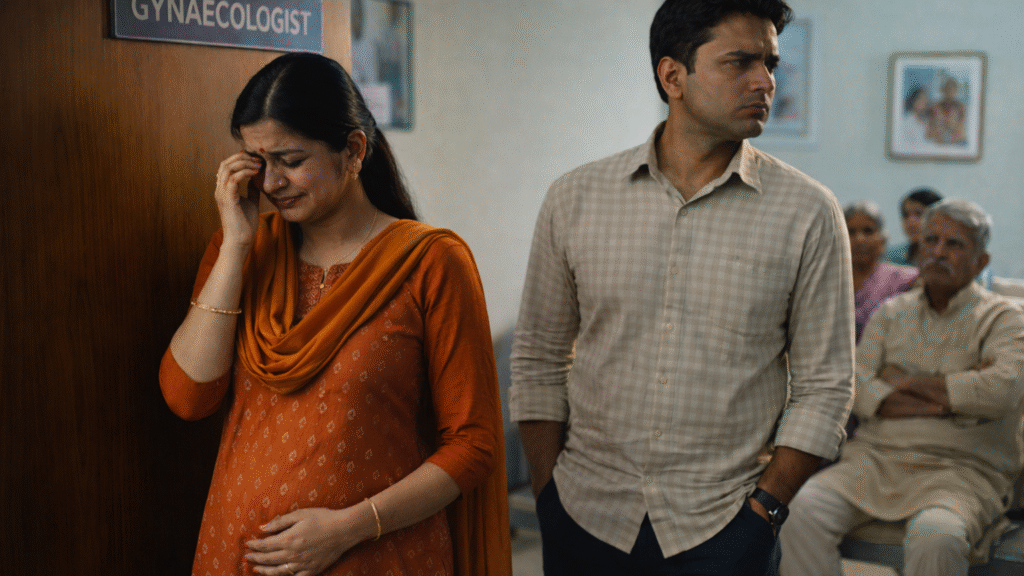
India’s Supreme Court has delivered one of its sharpest rebukes yet against sex-selective abortion, calling the practice a “crude manifestation of discrimination against women” and warning that it strikes at the heart of constitutional equality. The ruling has reignited national debate about son preference, skewed sex ratios, and the persistent shadow of gender bias in the world’s largest democracy.
The case revolved around enforcement of the Pre-Conception and Pre-Natal Diagnostic Techniques (PCPNDT) Act, a 1994 law enacted to prevent the misuse of medical technology for prenatal sex determination. Originally introduced as ultrasound technology became widely accessible, the law was strengthened in 2003 after mounting evidence that diagnostic tools were being used to identify female fetuses, leading to sex-selective abortions. Despite decades of legislation and monitoring, implementation gaps have continued to trouble courts and activists alike.
In its recent observations, the Supreme Court reiterated that sex-selective abortion is not simply a regulatory violation but a direct assault on the principle of equality guaranteed under Article 14 of the Constitution. By describing female foeticide — a term often used in judicial and activist discourse — as a “crude manifestation” of discrimination, the bench underscored that son preference–driven sex selection reflects deep-rooted structural inequality rather than isolated malpractice by clinics.
India’s demographic data tells a complicated story. According to the National Family Health Survey (NFHS-5, 2019–21), the overall sex ratio has improved, with women slightly outnumbering men nationally. Yet the child sex ratio remains uneven in several states. The 2011 Census recorded 919 girls per 1,000 boys in the 0–6 age group, a significant decline from previous decades. More recent sample data suggest modest improvement, but demographers caution that sex selection may simply have become less visible rather than eliminated.
Son preference in India is sustained by overlapping economic, cultural and social factors. In many communities, sons are traditionally expected to carry forward the family name, inherit property, and perform the antim sanskar (last rites) for parents. Daughters, meanwhile, are still frequently associated with dahej (dowry), a practice outlawed but far from eradicated. In patrilineal systems, where lineage and land pass through male heirs, families may view sons as long-term economic security.
Importantly, sex-selective abortion cuts across class, caste and religious lines. Research has shown that skewed sex ratios can be pronounced in urban and affluent areas, where access to private healthcare and prenatal diagnostics is easier. This challenges the assumption that education or income alone dissolve gender bias.
Public health experts warn of long-term consequences. A sustained imbalance in child sex ratios can produce what demographers call a “marriage squeeze,” where fewer women are available for marriage in adulthood. In parts of northern India, scholars have linked male-heavy populations to increased trafficking, forced marriages and gender-based violence. While causation is complex, the demographic distortions raise serious social concerns.
The Supreme Court has previously directed states to strengthen monitoring of ultrasound clinics, ensure proper record-keeping, and appoint dedicated authorities under the PCPNDT Act. Yet enforcement has often faltered due to administrative weaknesses, procedural lapses or corruption. The latest ruling signals judicial frustration with half-hearted compliance and calls for stricter vigilance.
At the same time, experts argue that punitive measures alone cannot dismantle son preference–driven sex selection. The issue is embedded in broader gender inequality — from unequal inheritance rights to limited economic participation by women. Although India has expanded girls’ education and introduced reservation quotas for women in panchayati raj (village councils), female labour force participation remains relatively low. Economic empowerment, analysts say, is essential to shifting family calculations about daughters’ worth.
There is also a delicate balance between preventing gender-biased sex selection and safeguarding reproductive autonomy. India’s abortion law permits termination under specified conditions, and recent amendments expanded access for certain categories of women. Courts have repeatedly emphasised that protecting women’s right to choose must not become a cover for discrimination against female fetuses. Navigating this tension requires precision: condemning son preference without undermining reproductive rights.
Government campaigns such as Beti Bachao, Beti Padhao (Save the Daughter, Educate the Daughter) have attempted to reframe daughters as assets rather than burdens. Some states celebrate the birth of girls through incentive schemes and public recognition. Yet cultural norms shift slowly. Expectations about lineage, inheritance and family honour continue to influence private decisions in ways that legislation alone cannot fully control.
The Supreme Court’s strong language serves as both legal directive and moral signal. By characterising sex-selective abortion as a crude form of discrimination, the judiciary is asserting that equality must begin before birth. Whether this translates into sustained political will and deeper social transformation remains uncertain. But the message is unmistakable: son preference–driven sex selection is incompatible with a constitutional democracy committed to gender justice.
I have no patience for euphemisms. Let’s call it what it is: son preference–driven sex selection. Not “family planning.” Not “balancing.” Not “just one boy.” When a fetus is aborted because it is female, that is discrimination before a girl even takes her first breath.
I actually welcomed the Supreme Court’s blunt words. When judges describe sex-selective abortion as a “crude manifestation” of discrimination, they are not being dramatic. They are being accurate. This isn’t about technology. Ultrasound machines don’t hate girls. Patriarchy does.
I’ve lived across Asia long enough to see how modernity and misogyny coexist beautifully. A woman can run a startup in Gurugram, another can command a police unit in Chennai, and yet somewhere else a family still whispers, “Ladki hai” — it’s a girl — as if it were unfortunate news.
Let’s be honest. Son preference is fear dressed up as tradition. Fear of dowry. Fear of losing property. Fear of ageing without a male caretaker. Fear of what neighbours will say if there is no heir. So instead of confronting those fears, society eliminates the girl.
But here’s the feminist tightrope: we defend reproductive rights fiercely — and we must. Abortion access protects women’s autonomy. Yet when “choice” is shaped by family pressure, economic coercion, and generational bias, is it truly free? A woman pushed to terminate a pregnancy because the fetus is female is not exercising empowerment. She is navigating constraint.
If India wants to honour “Beti Bachao,” then save daughters in more than slogans. Ensure equal inheritance. End dowry in practice, not just law. Make daughters economic security, not perceived liability. Make sons learn caregiving. Rewrite the script.
A country that can send missions to the moon can surely welcome its girls without hesitation.
The problem isn’t capacity. It’s courage.