


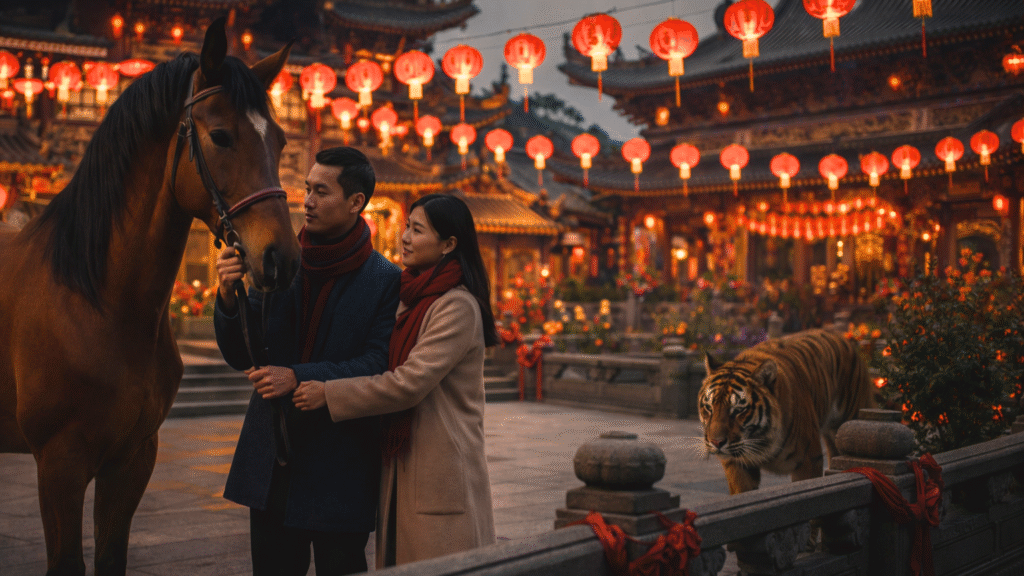
The coming Lunar New Year will usher in the Year of the Horse, a sign associated with restlessness, drive, and forward momentum—and across Chinese-speaking societies, that alone is enough to make some couples glance nervously at calendars, fertility apps, and the opinions of their parents. For many families, Chinese New Year is not just about reunion dinners and red envelopes; it is also a reminder that timing a pregnancy can feel like timing a destiny. As the zodiac wheel turns, questions quietly resurface at dining tables and in private chats: Is this a good year to conceive? Should we wait? What kind of child will this sign bring us?
Planning pregnancies around the Chinese Zodiac is one of those traditions often described as “old-fashioned” and yet stubbornly alive. The Chinese zodiac system, based on a twelve-year lunar cycle of animals, assigns symbolic traits, fortunes, and life paths to people according to their birth year. A Dragon child is believed to be charismatic and powerful, a Rat clever and adaptable, an Ox steady and hardworking. Other signs are more ambivalent. The Goat or Sheep is often linked to hardship or emotional softness, while the Tiger—especially when it comes to daughters—can trigger anxieties about stubbornness, dominance, or being “too strong” to fit conventional gender expectations. The Horse itself carries mixed symbolism: energetic, independent, charismatic, but also difficult to control. Whether admired or feared, these meanings matter enough to shape real reproductive decisions.
In practice, zodiac-based pregnancy planning is rarely mystical in a dramatic sense. It is logistical, calculated, and surprisingly mundane. Couples count backwards from the desired zodiac year, factoring in lunar calendars rather than Western months, and quietly adjust their contraception habits. Some delay marriage or childbearing by a year or two to avoid an “unlucky” sign. Others aim for a narrow conception window to ensure the baby is born after Lunar New Year, not before it. In particularly coveted years—most famously Dragon years—maternity wards have recorded spikes in births, and doctors in some regions have openly acknowledged an increase in scheduled caesarean sections timed to deliver babies just after the New Year’s bell rings.
The pressure to “get the timing right” rarely comes from abstract belief alone. It is social, relational, and often intergenerational. Parents and grandparents, especially those who lived through economic hardship or political upheaval, tend to view zodiac planning as a form of care rather than superstition. Advising a couple to wait for a better year is framed as helping a future child avoid suffering and competition. Phrases like “a Dragon has an easier life” or “a Goat child has to struggle more” circulate casually, presented as common sense rather than coercion. For only children—still common in urban families shaped by past population policies—the stakes feel even higher. If you are only going to have one child, why not choose the best possible year?
Yet beneath the surface of this well-meaning advice lies a clear gender imbalance. It is women’s bodies that must align with lunar calendars, family expectations, and biological clocks all at once. Many women describe feeling as though their reproductive choices are no longer fully their own, but a collective project managed by parents, in-laws, and cultural symbolism. Career plans may be postponed. Fertility anxiety intensifies as women are encouraged to wait for a better zodiac year even as doctors warn about age-related risks. When timing does not work—when conception is delayed, or a baby arrives just before Lunar New Year—it is usually women who absorb the disappointment and blame, quietly and internally.
Comfort levels vary widely. Some women genuinely enjoy zodiac planning and see it as a playful, meaningful connection to tradition. Others comply out of pragmatism, reasoning that waiting one year might buy peace at home, even if they do not personally believe in zodiac destiny. Among younger, urban, and highly educated couples, open resistance is more common, but often carefully managed. Instead of outright rejection, many adopt a “why not” logic. It may not be scientifically true, they say, but if it reassures parents and doesn’t cause major harm, it feels easier to go along. In this way, belief mutates rather than disappears, blending astrology with spreadsheets, fertility tracking apps, and housing plans.
The emotional toll of this quiet compromise is easy to underestimate. Women speak of anxiety around “missing the window,” guilt for wanting to prioritize their own readiness, and resentment when their bodies become symbols of family luck. Men, by contrast, are rarely held responsible if timing fails. If conception is late or early, the narrative still centers on the woman’s body, age, or stress levels. Zodiac planning may be framed as gender-neutral tradition, but in lived experience, it remains deeply gendered.
Despite modernization, declining birth rates, and rising skepticism toward superstition, zodiac-based pregnancy planning continues to shape demographic patterns. Researchers have noted long-term consequences of birth booms in favored years: overcrowded classrooms, intense competition for school places, and later, job market bottlenecks among large cohorts born under the same sign. Ironically, the belief that a particular zodiac year guarantees success can help create the very competition parents hoped their child would avoid.
As the Year of the Horse approaches, these conversations are likely to intensify again, especially among couples already under pressure to have children. The Horse, associated with independence and speed, feels symbolically fitting for a generation caught between tradition and autonomy. For some, it will be another year to avoid; for others, a sign of strength and ambition worth embracing. What remains constant is the underlying question: who gets to decide when and why a woman becomes pregnant?
Zodiac planning persists not because everyone believes in it blindly, but because it sits at the intersection of love, fear, responsibility, and social expectation. It is about giving a child every imagined advantage in an uncertain world, even if that advantage is symbolic. For women, however, the cost of that symbolism is often personal, physical, and emotional. As fertility becomes more politicized and family pressure collides with modern life, the Chinese Zodiac continues to do what it has done for centuries: shape intimate choices, quietly, year after year, one birth at a time.
I’ve lost count of how many times I’ve sat at dinner tables across Asia and heard someone say, with absolute sincerity, “It’s better to wait one more year.” One more year for luck. One more year for the right zodiac. One more year for a Dragon instead of a Goat, anything but a Tiger girl. And every time, I look at the woman at the table, smiling politely, nodding, swallowing her own timeline like it’s another mouthful of overcooked dumpling.
Let’s be clear: women’s wombs are not factories. They are not production lines calibrated to lunar calendars, parental anxieties, or cosmic branding strategies. Making a baby is not a project plan. It is not a launch date. And it should never feel like a compliance exercise designed to please ancestors, neighbors, or WhatsApp family groups.
I understand the impulse. Truly. In societies shaped by scarcity, competition, and intergenerational trauma, people cling to symbols of control. The Chinese Zodiac becomes a way to tell ourselves we can protect our children from suffering by choosing the right moment. But somewhere along the way, concern turns into pressure, and pressure quietly turns into entitlement over women’s bodies. Suddenly, a woman’s fertility is no longer hers; it belongs to the family narrative, the lineage, the imagined future résumé of a child not yet conceived.
What gets lost in all this talk of auspicious years is the very real, very human experience of women. Bodies don’t always obey calendars. Careers don’t pause neatly for superstition. Desire doesn’t arrive on command. Forcing timing—waiting when you’re ready, rushing when you’re not—creates stress, guilt, and resentment. And guess who carries that emotional load? Not the uncles quoting zodiac traits. Not the fathers saying “just wait a bit.” It’s the women, lying awake at night, calculating age, health, expectations, and fear.
And let’s talk about choice. Real choice. Not the kind wrapped in “we’re just thinking of the child,” or “it’s only one more year.” A free choice means a woman can say yes or no without punishment, without emotional blackmail, without being told she is selfish or shortsighted. It means trusting women to know when they are ready—physically, emotionally, financially—to bring another human into the world.
Children are not born lucky because of an animal sign. They are born lucky because they are wanted, loved, and raised by adults who were ready, not coerced. If tradition cannot make space for women’s autonomy, then tradition deserves to be questioned, not obeyed.
So here’s my radical proposal: let’s stop treating time as a weapon against women. Let’s stop outsourcing reproductive decisions to astrology while pretending it’s harmless. And let’s remember that no zodiac sign, no calendar, no family pressure matters more than this simple truth—women are people, not vessels. And their time is theirs.