


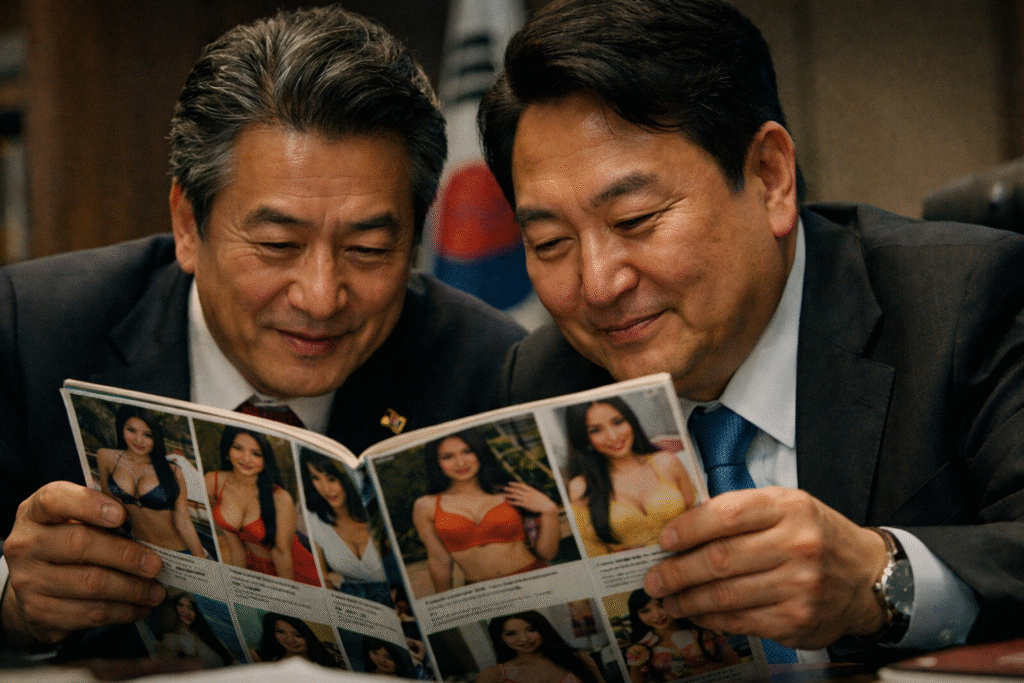
In a region anxious about demographic winter, a single phrase can ignite a diplomatic firestorm. When a South Korean local official, speaking about rural depopulation and collapsing birth rates, suggested “importing young women”, preferably virgin, from Vietnam and Sri Lanka, the backlash was swift and global. The remarks ricocheted across Seoul and Hanoi, triggered formal protests from Vietnam, and forced apologies at home. The episode exposed not just a rhetorical gaffe but a raw nerve running through East Asia’s population crisis, cross-border marriage industry, and the way women’s bodies are still framed as demographic tools.
South Korea’s population decline is severe and well documented. The country’s 출산율 (chulsan-yul, birth rate) has hovered near the world’s lowest, while the 혼인율 (honin-yul, marriage rate) has sunk alongside rising housing costs, long work hours, and shifting gender expectations. Rural counties in provinces like South Jeolla face empty schools and shuttered clinics. Against this backdrop, some local leaders speak bluntly—too bluntly—about solutions. In early February, comments by a county head about “bringing in” young women to replenish villages were reported by Korean and Vietnamese media, with variations that included references to “virgins” and to Southeast Asian countries as sources. The phrasing—transactional, racialized, and gendered—was the scandal.
Vietnam’s response was immediate. Officials condemned the remarks as demeaning to Vietnamese women and demanded respect, emphasizing that cross-border marriages are human relationships, not policy instruments. Vietnamese media amplified the outrage, while social networks filled with anger from women who felt reduced to inventory. In Seoul, provincial authorities apologized, acknowledging that the language was inappropriate and inconsistent with Korea’s commitment to dignity and equality. Yet the damage lingered because the words echoed a familiar, uncomfortable reality.
For decades, South Korea has quietly relied on 국제결혼 (gukje-gyeolhon, international marriage) to stabilize rural households. Since the 2000s, matchmaking agencies connected Korean men—often older farmers or factory workers—with women from Vietnam, Cambodia, China, and the Philippines. The state eventually reframed these unions as 다문화가정 (damunhwa gajeong, multicultural families), expanding language classes and integration services. The shift in vocabulary mattered, but the power imbalance did not disappear. Reports of exploitation, isolation, and domestic abuse have repeatedly surfaced, prompting regulatory crackdowns and counseling requirements. Even so, the idea that women can be “brought in” to solve a numbers problem persists in corners of local politics.
That idea collides with a new generation’s sensibilities. Younger Koreans, particularly women, increasingly reject marriage and motherhood under existing conditions, citing unpaid care burdens and workplace discrimination. Feminist debates have reshaped the national conversation, making objectifying language politically radioactive. When a public official speaks of importing women, critics hear a refusal to address structural causes—housing affordability, childcare, gender pay gaps—while outsourcing reproduction to poorer countries.
The controversy also reverberated beyond Vietnam. Sri Lanka’s name appeared in some reports, underscoring how casually entire societies can be lumped together as labor—or bride—reservoirs. Diplomats bristled, and scholars pointed out the colonial echoes. In Southeast Asia, where migration has long been a ladder to opportunity, women know the risks of crossing borders for marriage. Many succeed and build loving families; others encounter precarity. Reducing that spectrum to a crude fix for depopulation erases lived experience.
Cultural context matters. Korean social bonds are often described through 정 (jeong, deep affection/attachment), a word that connotes care built over time. Marriage, 혼인 (honin), traditionally carried expectations of mutual support and family continuity. But when policy panic meets patriarchal reflex, language slips, and affection evaporates. What remains is a technocratic fantasy: if domestic women won’t marry, find foreign ones. The backlash shows that such thinking no longer passes unchallenged—at home or abroad.
What comes next is the harder work officials avoided. Experts argue that reversing population decline requires making life livable: affordable homes, shorter workweeks, reliable childcare, and genuine gender equality. For rural areas, that means investing in services and jobs rather than treating marriage migration as infrastructure. Cross-border families will continue to form, as they always have, but with consent, agency, and respect at the center—not as a demographic import scheme.
The episode has become a cautionary tale in diplomacy and domestic politics. Words matter because they reveal priorities. In an era when East Asia’s demographic anxiety is real and urgent, the choice is stark: confront the social contract that discourages family life, or reach for shortcuts that demean women and strain regional ties. The apologies were necessary. The reckoning remains.
Spicy Auntie nearly spilled her coffee when she read the words “import women.” Import. As in rice. As in cement. As in something you stack in containers and clear through customs with a stamp. Not women with mothers, ambitions, WhatsApp groups, opinions, and a very sharp sense of when they’re being insulted. If this is the level of imagination some local officials bring to a demographic crisis, no wonder young people are running away from marriage like it’s a bad group chat.
Let’s be clear: South Korea’s population problem is real. Villages empty out, schools close, elders sit alone watching the fields turn quiet. But when the solution offered is “bring in young women from poorer countries,” Auntie hears something else entirely. Not care. Not policy. Just old-school entitlement dressed up as urgency. The birth rate drops, and suddenly women—especially foreign women—are reduced to spare parts for a broken system.
Vietnamese women, Sri Lankan women, Southeast Asian women in general have heard this tune before. Smile, be grateful, marry quickly, produce babies, keep quiet. Auntie has met many of these women across Asia. Some built strong families and lives they chose. Others paid a high price for someone else’s idea of social stability. To pretend these marriages are just demographic tools is to erase decades of pain, resilience, and very hard-earned dignity.
What really burns is the laziness of it all. Instead of fixing housing costs, soul-crushing work culture, unpaid care labor dumped on wives, and workplaces that punish motherhood, someone reaches for the cheapest shortcut: other women’s bodies. When local leaders say things like this out loud, they reveal how little they’ve listened to their own daughters, sisters, or female colleagues—assuming they have any left in the room.
And don’t hide behind “it was just a joke” or “taken out of context.” Auntie has lived long enough to know that jokes are where truth stretches its legs. If you can imagine importing women, you already see them as commodities. Full stop.
The diplomatic fallout was deserved. Vietnam was right to be furious. Because respect between countries begins with respect for women. Not as brides-for-export, not as fertility solutions, but as people who choose—freely—where and how they live.
Here’s Auntie’s unsolicited advice: if your country wants more babies, start by making life kinder to the women already there. Pay them fairly. Let them rest. Let them dream. And if someone from abroad falls in love and joins your community, welcome her with humility, not ownership.
Women are not infrastructure. They don’t fix systems that refuse to fix themselves. And anyone who still thinks otherwise deserves all the outrage coming their way.