


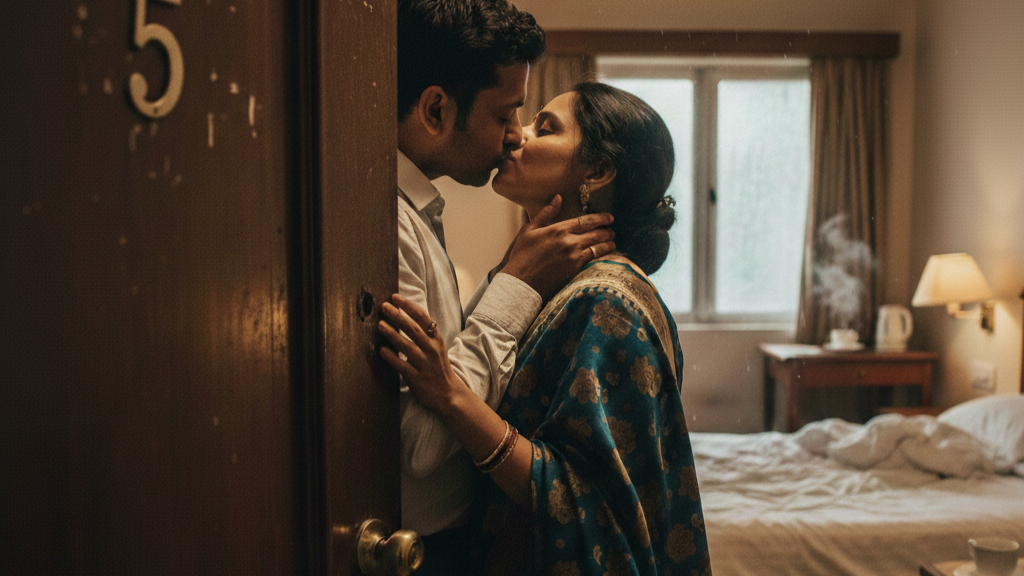
There are no neon hearts or mirrored ceilings in Bangladesh, no openly advertised “love hotels” where couples can slip in for a few anonymous hours. Yet intimacy still happens, desire still insists, and unmarried couples still find ways to be alone. What exists instead is a shadow geography of rooms, timings, and quiet negotiations—a system that functions like love hotels without ever daring to call itself that.
In Bangladesh, intimacy outside marriage is not explicitly illegal in most circumstances, but it is socially explosive. The real threat is rarely a clear statute; it is exposure. A hotel stay is not just a transaction with a receptionist but an encounter with a dense web of surveillance: CCTV cameras, ID registers, hotel staff gossip, police patrols, and the ever-present moral authority of neighbors and local power brokers. Privacy, here, is not assumed. It is borrowed.
Unmarried couples therefore become skilled navigators. The most common solution is the unremarkable budget or “residential” hotel, especially in busy urban areas like Dhaka or Chattogram, where foot traffic is constant and anonymity is easier to maintain. These hotels rarely advertise anything about couples; discretion is signaled indirectly. A receptionist who doesn’t ask unnecessary questions. A front desk that doesn’t flinch when two adults check in together. A location near transport hubs where people come and go at all hours.
Resorts play a more ambiguous role. On the outskirts of cities or in coastal areas, they offer privacy behind walls, greenery, and distance. But they also attract attention. In smaller towns, resorts are often embedded in conservative local communities, and this is where stories of “raids” and forced moral interventions emerge—sometimes by police, sometimes by self-appointed guardians of virtue. What looks like seclusion can turn into a trap if local sentiment turns hostile.
For couples, the calculation is constant: visibility versus control. A cheap hotel in a crowded commercial district may feel safer than a picturesque resort where every guest is noticed. Timing matters, too. Arriving late, leaving early, blending in with business travelers or families—these are not romantic details, but they shape how intimacy is practiced.
Documentation is another fault line. Most hotels require identification from both guests. Officially, this is about security. In practice, it creates a paper trail that can feel dangerous in a country where police checks and informal harassment are not uncommon. Couples speak quietly about minimizing digital footprints, being cautious with phone contents when traveling, and choosing places where staff are known to be professional rather than moralistic. Intimacy extends beyond the room; it includes the management of data, glances, and rumors.
Gender shapes these risks unevenly. Women carry far more reputational weight. A man exposed in a hotel room may be embarrassed; a woman can be shamed, blamed, or threatened with consequences that ripple through family and work. This imbalance affects who insists on secrecy, who panics at the sound of footsteps in the corridor, who fears a knock on the door. Love hotels elsewhere promise freedom from judgment. In Bangladesh’s unofficial version, judgment is always waiting just outside.
Class matters too. Middle-class couples are more likely to afford hotels that quietly tolerate unmarried guests. Working-class couples often rely on far riskier options: short stays arranged through personal connections, or spaces borrowed rather than rented. Privacy becomes a privilege, not a right. The absence of a formal love-hotel industry does not mean abstinence; it means inequality in how safely desire can be expressed.
What emerges is a kind of emotional pragmatism. Romance is compressed into stolen hours. Tenderness is practiced softly, with ears tuned for sounds in the hallway. Couples learn not just how to love each other, but how to read a building: which staff member is on duty, whether the CCTV camera actually works, whether the atmosphere feels tense or indifferent. Intimacy becomes a shared act of risk assessment.
This quiet system also reflects a broader contradiction in Bangladeshi society. Cities modernize, young people date, apps connect strangers who quickly become lovers. Yet public narratives remain anchored in moral certainty. The state may speak the language of rights and privacy, but enforcement on the ground often blurs into social control. In that gap, unofficial love hotels flourish—not as places, but as practices. Calling them “love hotels without the name” is not just a metaphor. It captures a reality where the function exists but the label is forbidden. To name such spaces openly would be to admit that unmarried intimacy is normal, persistent, and human. Instead, it is pushed into back rooms and unspoken understandings.
For couples who use these spaces, the goal is not rebellion. It is normalcy: the chance to talk without whispering, to touch without fear, to exist briefly without an audience. The irony is that the very intensity of surveillance makes these moments feel more precious. In a society that watches so closely, privacy becomes an act of care—toward oneself and toward the person you love. In Bangladesh, love does not check into a themed hotel. It slips through side entrances, signs the register, and hopes the door will close quietly behind it.
Secrecy can be delicious. Let’s be honest. The locked door, the stolen hour, the phone on silent, the feeling that the world must not know—this is the stuff of old novels and bad decisions and very good kisses. Secrecy sharpens desire. It makes hands bolder and time sweeter. It tells lovers: this matters enough to hide.
But Auntie has lived long enough, and crossed enough borders, to tell you this: secrecy is a spice, not a diet.
In some countries, secrecy is playful. In others, it becomes labor. Emotional labor. Strategic labor. Survival labor. You don’t just plan the date, you plan the exit routes. You don’t just choose a hotel, you assess the receptionist’s face, the CCTV angle, the moral temperature of the neighborhood. You don’t just fall in love—you manage risk.
That’s when secrecy stops being sexy and starts being exhausting.
When every intimate moment comes with a background hum of fear—What if someone knocks? What if someone recognizes me? What if my name ends up on a list?—the body never fully relaxes. Desire tightens instead of opening. Pleasure rushes instead of lingering. Love becomes something you squeeze into the margins of a hostile world.
And let’s be clear: this burden is not evenly shared. It almost never is. Women pay more. Queer people pay more. Trans people pay more. The ones with less family protection, less money, less “respectability armor” pay the highest price. For them, secrecy isn’t a naughty thrill. It’s a shield. And shields are heavy when you have to carry them every day.
In some places, the cost of being discovered is not just shame or gossip. It can be violence. Arrest. Forced marriage. Public humiliation. The kind of danger that teaches people to love quietly, quickly, and with one eye always open. That’s not romance. That’s triage.
Auntie is not against secrecy. Heaven forbid. Some of my best memories wore secrecy like silk lingerie. But secrecy should be chosen, not imposed. It should add sparkle, not steal sleep. It should feel like a wink, not a warning.
Love needs oxygen. It needs moments where you’re not calculating, not scanning, not shrinking yourself to fit into someone else’s idea of morality. When a society forces all intimacy into the shadows, it doesn’t stop love—it just teaches love to crouch.
And crouching, my darlings, is terrible for the spine.