


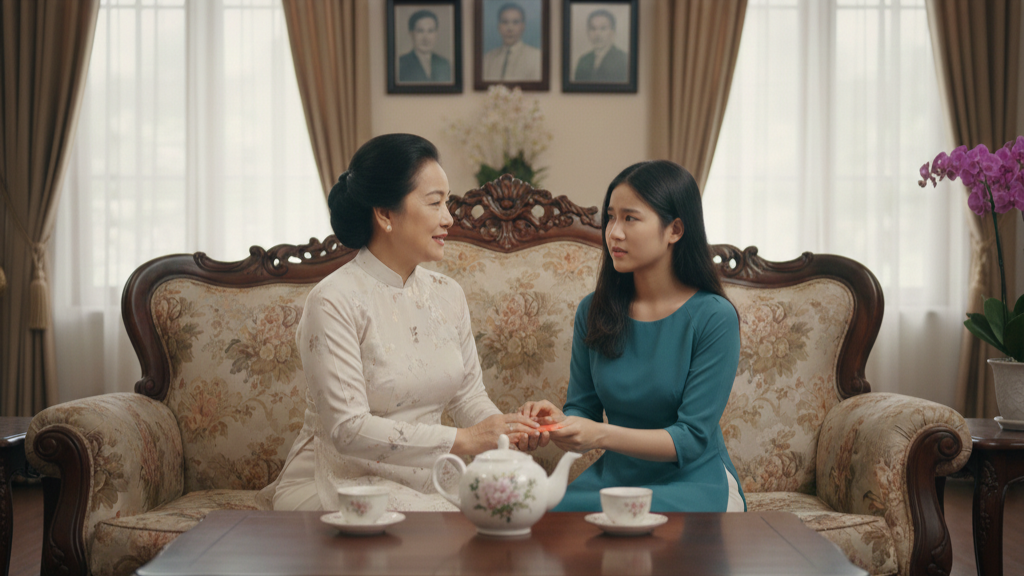
In the popular imagination, the Asian “auntie” is a creature of judgement: sharp-eyed, gossip-prone, deeply invested in other people’s marriages, weight gain and moral lapses. She is imagined as the sentry guarding tradition, the first to ask why a girl is still unmarried, why she works so late, why she talks back. And yet, beneath this stereotype, another auntie exists — quieter, strategic, emotionally literate — one who has been quietly helping young women slip the leash for decades.
She does not announce herself as progressive. She does not argue with fathers or pick fights with mothers. She does not post slogans or talk about feminism. Instead, she operates in the half-light of domestic life, where kitchens double as confessionals and family WhatsApp groups are managed like intelligence networks. Her tools are small and deniable: a cover story, a whispered warning, an envelope of cash folded twice and passed hand to hand.
Across the urban and semi-urban areas of Asian countries, particularly in middle-class families navigating the tension between aspiration and respectability, aunties often become the most effective enablers of young women’s independence. When a daughter wants to move cities for work, delay marriage, leave a suffocating engagement or pursue education that does not come with an obvious groom attached, it is often an aunt — not a parent — who quietly makes it possible.
The first gift is usually a story. Aunties understand that in families where respectability still frames every decision, truth is less important than plausibility. “She’s staying with relatives while preparing for exams.” “The office has sent her for compulsory training.” “The doctor advised less stress.” These explanations are designed to sound temporary, medical or professional — categories that are culturally safe. Permanence is dangerous; a defined end-point keeps anxiety at bay. Aunties know that you don’t need permission to live differently, you need an explanation that allows others to look away.
Money follows story. Financial dependence is where many young women get trapped, and aunties know exactly how to bypass male gatekeeping without leaving a paper trail. Cash is slipped into handbags, tucked into sari blouses, pressed into palms at bus stops. Gold jewellery is “kept safe” and quietly sold if needed. Emergency funds are framed as loans that are never repaid. Rent becomes “wedding savings.” No receipts, no bank transfers, no questions asked later. Crucially, this help is never described as empowerment. It is “just in case,” “for safety,” “for emergencies.” Language matters; calling it protection keeps it respectable.
What aunties offer is not rebellion but moral permission. They rarely tell young women to defy their families outright. Instead, they say things that loosen the knot just enough to allow movement. “Your happiness matters too.” “Education is never wasted.” “Marriage can wait; time doesn’t.” Often, the most devastating line is also the softest: “Don’t end up like me.” These sentences are rarely said loudly. They are delivered while chopping vegetables or folding laundry, in moments where intimacy feels accidental. Yet for many young women, they are the first time an older woman has named regret — and in doing so, legitimised choice.
Many aunties are speaking from experience. They married early, followed husbands to unfamiliar cities, abandoned careers that never quite came back. They learnt the cost of obedience too late to avoid it themselves, but not too late to recognise it in others. Helping a niece, cousin or neighbour’s daughter becomes a way to correct history without openly challenging it. This is not ideological feminism; it is survival feminism, born of hindsight.
Inside joint families, aunties also act as narrative managers. They intercept gossip before it hardens into scandal, downplay “bad behaviour,” and reframe independence as sacrifice. A young woman working late is not ambitious, she is “helping the family.” A delayed marriage is not resistance, it is “bad timing.” If something goes wrong, aunties often absorb the blame quietly, protecting younger women from full exposure. Silence, in this context, is not complicity but armour.
There is a reason this work is so often done by aunties rather than mothers. Mothers are emotionally and socially exposed; their daughters’ choices reflect directly on their competence and virtue. Aunties, particularly a father’s sister or an older cousin, have distance with influence. They can intervene without being held fully responsible. Many have their own income, more mobility, and fewer eyes on them. They can move between generations, translating one world to another without fully belonging to either.
This quiet support also explains a paradox visible across Asia: outward conservatism paired with rapid social change. Families insist nothing is changing even as daughters live alone, work late, marry late or not at all. The contradiction is resolved through silence and storytelling. Aunties are not dismantling the system; they are hacking it, creating escape routes that do not trigger alarms.
It would be a mistake to romanticise this figure. The same auntie who slips cash to one girl may shame another. Solidarity is often selective, personal rather than political. Help is given not because all women deserve freedom, but because this particular woman feels familiar, deserving, or reminds the auntie of herself. Yet even this partial solidarity has cumulative effects. Each cover story buys time. Each envelope buys options. Each whispered sentence shifts what feels possible.
I have met this auntie everywhere in Asia.
In Jakarta, she wears batik and pretends not to understand why a young woman “needs” to live alone, while quietly wiring her rent money every month. In Seoul, she clicks her tongue at an unmarried niece, then slips her a business card for a lawyer, a gynecologist, or a therapist she knows “just in case.” In Bangkok, she laughs loudly about farang men and loose morals, then watches the door while a girl packs her bags to leave a bad marriage. In Singapore, she scolds you for being too outspoken and too ambitious — and then introduces you, very carefully, to the right people.
Asian aunties are not feminists in the way NGOs like to imagine feminists. They do not hold placards. They do not quote theory. Many of them actively police women — until suddenly, they don’t. Until it’s this girl, this situation, this moment where they recognise the familiar tightening of a life closing too early.
And then they act.
Not loudly. Not heroically. They act the way women who have survived patriarchies always have: through logistics, secrecy, and timing. A story that buys a year. An envelope that buys a choice. A sentence whispered once, never repeated: “Don’t rush. You still have time.” In Asia, that sentence can change the entire trajectory of a life.
What fascinates me is how morally sophisticated these aunties are. They understand systems better than most activists. They know when confrontation will destroy a girl, and when silence will protect her. They know which lies are harmless, which truths are dangerous, and which compromises are temporary. They don’t believe the world is fair — they believe it is navigable.
And yes, their solidarity is selective. They will help one girl escape and shame another for the same behaviour. That contradiction makes Western observers uncomfortable. It doesn’t bother me. Change here has never been clean. It has always been negotiated, personal, relational. Revolution happens one kitchen conversation at a time.
Asian aunties carry the memory of roads not taken. Careers aborted. Loves swallowed. Bodies disciplined into obedience. They don’t need vocabulary to recognise injustice — they feel it in their bones. Helping a younger woman is not activism; it is repair.
So the next time someone dismisses “aunties” as the problem, I laugh. If patriarchy in Asia has cracks, it’s because generations of older women have been quietly chiselling at it with excuses, cash, and perfectly timed silence.
Not all heroes are visible. Some of them are just very good at minding other people’s business — in the right direction.