


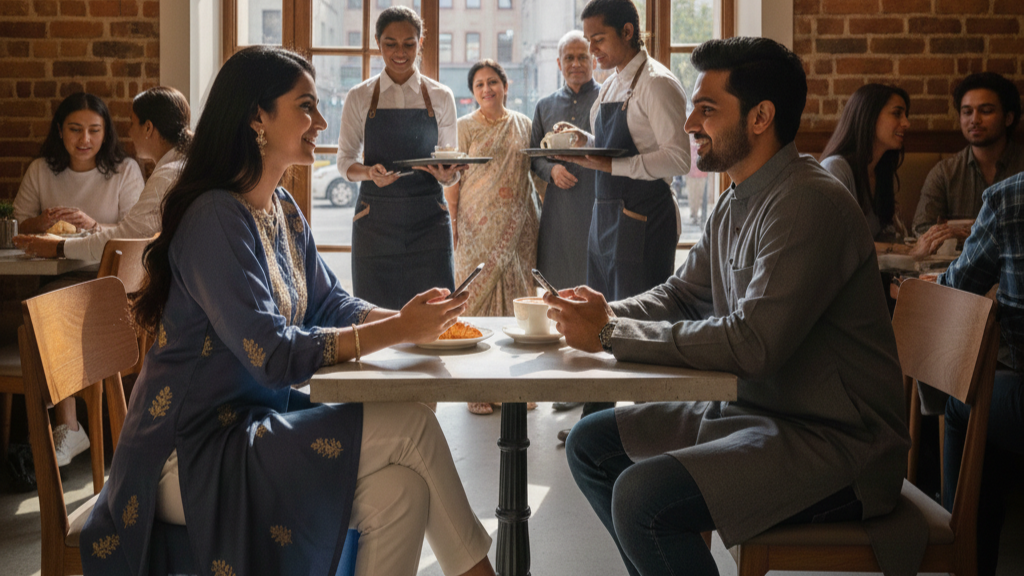
Dating in India today is quieter than the stereotypes suggest. Less dramatic than Bollywood montages, less rebellious than parental anxieties, and far more deliberate than the frantic swiping culture often associated with apps. Beneath the noise of memes, viral dating jargon, and breathless think-pieces about “modern love,” a slower, more intentional approach to romance is taking shape—driven largely by women, urban youth, and a generation that has grown tired of emotional chaos.
Recent surveys and dating-platform data reported in Indian media point to a clear shift: many Indian women now date with defined boundaries, sharper filters, and a clearer sense of what they do not want. Instead of chasing validation through endless matches, women increasingly screen profiles for values, emotional tone, communication style, and long-term compatibility. The goal is not maximum attention but emotional efficiency. Swiping has become selective, conversations shorter but more purposeful, and early exits from unsatisfying interactions more common—and unapologetic.
This does not mean romance has disappeared. It means romance is being managed. Dating apps remain central to how Indians meet, especially in large cities, but their use has evolved. Profiles are now expected to signal intention, not just attractiveness. Vague bios, performative charm, or overt sexual bravado are often read as red flags rather than confidence. Many users prefer slower pacing, fewer matches, and conversations that move quickly toward clarity: What are you actually looking for? Are you emotionally available? How do you handle conflict?
One emerging pattern is what some daters casually refer to as “dating with a review point.” Rather than drifting indefinitely, couples agree—sometimes implicitly, sometimes explicitly—to reassess the relationship after a few months. This is not cynicism so much as self-preservation. In a context where marriage still looms as a serious social expectation, ambiguity can feel costly. Young Indians are increasingly unwilling to invest emotional labour without a sense of direction, especially women who are balancing careers, family pressures, and social scrutiny.
Another noticeable change is how dating is displayed—or hidden—online. The “soft launch” has become common: a hand in a photo, a blurred figure, a carefully cropped story post. Public declaration comes late, if at all. This reflects not secrecy, but caution. Social media in India remains deeply intertwined with family networks, colleagues, and community surveillance. Many daters prefer to protect their private lives until a relationship feels stable enough to withstand gossip, judgement, or unsolicited advice.
Despite these shifts, modern dating in India does not reject tradition outright. Instead, it negotiates with it constantly. Family approval still matters, especially beyond metropolitan bubbles, and marriage remains the assumed endpoint for many relationships. But young adults increasingly frame dating as a space for self-discovery rather than mere spouse selection. Emotional compatibility, shared worldviews, and mutual respect now compete seriously with caste, horoscope, and family background—sometimes quietly, sometimes openly.
Gender dynamics are central to this transformation. Women’s increased financial independence and exposure to global ideas about relationships have altered expectations on both sides. Many women now reject emotional caretaking roles early in dating, pushing back against assumptions that they will manage feelings, fix communication gaps, or tolerate inconsistency. Men, in turn, face new pressures to articulate emotions, show empathy, and demonstrate reliability—skills not traditionally emphasized in Indian masculinity.
At the same time, contradictions persist. While conversations about mental health, consent, and boundaries are more visible, dating remains uneven across class, geography, and language. Urban, English-speaking Indians enjoy far more freedom than their counterparts in smaller towns, where dating may still happen covertly or under the guise of friendship. Live-in relationships are legally permitted but socially contested, accepted in some circles and scandalous in others.
What is perhaps most striking about modern Indian dating is not how radical it looks, but how pragmatic it feels. Romance is still desired, but chaos is not. Grand gestures matter less than consistency. Chemistry matters, but so does emotional safety. For many young Indians, dating has become a process of aligning personal happiness with social reality, not rebelling against it outright.
This is not a generation rejecting love. It is a generation editing it—paring it down, clarifying its terms, and insisting that intimacy fit into lives that are already complex. Modern dating in India, for all its contradictions, reflects a deeper cultural recalibration: one where desire, autonomy, and responsibility are no longer treated as mutually exclusive, but as something to be carefully balanced, swipe by swipe, conversation by conversation.
I’m going to say something mildly controversial, which is Auntie’s brand anyway: modern dating in India isn’t collapsing—it’s maturing. Quietly. Unevenly. Sometimes awkwardly. But very clearly.
What fascinates me most is not the apps, the jargon, or the endless think-pieces about Gen Z “killing romance.” It’s the emotional recalibration happening under the surface. Indian women, in particular, seem tired of carrying the emotional backpack for everyone else. The listening. The forgiving. The waiting. The “let’s see where this goes” that mysteriously goes nowhere. I see far less desperation now, and far more discernment. Less drama, more decision-making.
I like this era of boundaries. Not the Instagram-therapy kind, plastered with pastel quotes, but the lived-in, practical ones. The kind that says: I will talk to you, but I won’t chase you. I will care, but I won’t parent you. I will date, but I won’t disappear into you. That’s not cold. That’s clarity. And clarity, in a culture long trained to romanticize sacrifice, is quietly radical.
The “soft launch” trend makes perfect sense to me. Why announce something fragile to a country that treats women’s relationships as public property? Why invite aunties, uncles, colleagues, and WhatsApp philosophers into something still finding its footing? Privacy, in India, is not secrecy—it’s self-defense.
What also stands out is how unromantic modern dating sounds when described honestly. Review points. Check-ins. Intentions. Emotional availability. None of this would sell a movie ticket. But it sells peace. And peace, especially for women navigating careers, families, and relentless social judgement, is deeply attractive.
Do contradictions remain? Of course. You can be fiercely independent on a dating app and still panic about introducing someone at home. You can talk consent fluently and still negotiate guilt around desire. You can want companionship and dread marriage in the same breath. India excels at emotional duality. We always have.
But I don’t buy the narrative that romance is dying. It’s just being edited. Less fluff, fewer illusions, more footnotes. Love is no longer expected to rescue people from unfulfilling lives; it’s being asked to fit into lives already under construction. That’s a heavy ask—and a fair one.
So yes, dating in India feels more cautious. More strategic. Less cinematic. But maybe that’s what growth looks like when a society finally allows women—and increasingly men—to say: I want love, not confusion. Connection, not chaos. And if that takes longer, so be it. Auntie approves.