


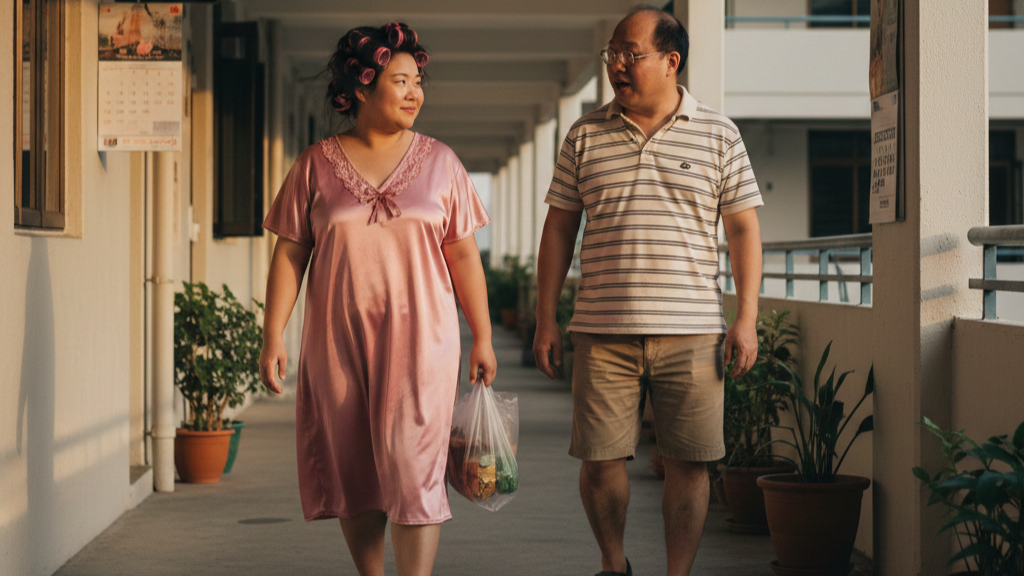
If porn reflected raw appetite, Asian screens would be crowded with excess: sculpted bodies, theatrical sex, relentless novelty. Instead, what dominates much of Asian male porn consumption is strangely modest. Bedrooms that look lived-in. Offices with bad lighting. Kitchens, stairwells, shared apartments. And women who look ordinary—sometimes striking, often not—wearing minimal makeup, dressed like coworkers or neighbors, speaking softly, moving without bravado. The fantasy is not abundance. It is plausibility.
Across East and Southeast Asia, aggregated viewing data and ethnographic research point in the same direction: the most powerful erotic pull is not the extreme, but the familiar. Men linger longer on amateur or semi-amateur videos, on scenarios that feel socially adjacent, on women who could exist in their real lives. Desire sharpens when the imagined distance between fantasy and reality collapses. Eroticism thrives not on spectacle, but on the possibility that this could happen.
This preference is not accidental. In densely populated cities, where lives overlap and privacy is thin, the imagination feeds on proximity. The woman next door, the coworker in accounting, the classmate who never noticed you—these figures carry erotic charge precisely because they already inhabit the social world. Porn becomes a rehearsal of everyday intimacy, a space where ordinary women are briefly allowed to be sexual without consequences. The thrill lies less in the act than in the breach: the familiar becoming available.
There is also fear embedded in this desire. In many Asian societies, masculinity is built on restraint, competence, and the ability to perform socially—at work, in family roles, in marriage. Sexual confidence in women can feel destabilizing in that context. It introduces the risk of comparison, rejection, or inadequacy. Fantasies gravitate instead toward women who appear shy, emotionally open, and non-confrontational, not because men want submission, but because they want safety. The erotic ideal becomes a woman who will not judge, challenge, or expose male vulnerability.
This helps explain the recurring aesthetic of emotional accessibility. The women in these fantasies often smile easily, listen attentively, and appear receptive rather than assertive. Their sexuality unfolds gently, as if discovered rather than claimed. For men trained to equate masculinity with control, this removes the terror of failure. Desire becomes something that happens to them, not something they must earn or initiate. Porn, in this sense, is less about dominance than about relief.
The “girl next door” fantasy also reveals a deeper contradiction in gender norms. In many Asian cultures, respectable women—wives, daughters, long-term partners—are expected to embody modesty and restraint. Sexual expression is displaced onto other figures: mistresses, sex workers, fictional women, or anonymous amateurs. Porn becomes the only space where “normal” women are permitted to be erotic, while real-life relationships remain emotionally and sexually constrained. The result is a quiet split: love without sex, sex without love, and fantasy carrying the weight of both.
This displacement has consequences. When eroticism is outsourced to imagination, real intimacy can feel disappointing or inefficient by comparison. Partners are expected to remain proper, while desire is satisfied elsewhere. Women bear the burden of respectability, men carry unspoken frustration, and both sides struggle to articulate what they want. The fantasy does not liberate; it manages tension.
Technology intensifies this dynamic. Dating apps, filters, and algorithmic desirability have raised the stakes of attraction, turning sex into a performance measured by likes and matches. Against this backdrop, the appeal of the ordinary grows stronger. Amateur aesthetics promise authenticity in a hyper-curated world. They restore a sense of intimacy that feels unmediated, even as it is carefully staged. The fantasy whispers: you don’t need to be exceptional to be desired.
What makes this pattern particularly pronounced in Asia is not prudishness, but structure. Public modesty, limited mixed-gender socialization, late sexual initiation, and intense family oversight all compress desire into narrow channels. When sexuality is rarely spoken aloud, it becomes quieter, more inward, more focused on what feels emotionally reachable. Desire learns to whisper rather than shout.
It would be easy to read this as a story about male limitation or repression. It is also a story about loneliness. Many men are raised to provide, not to connect; to perform roles, not to articulate feelings. Porn offers a simulation of closeness without risk, where desire is mutual, rejection is impossible, and intimacy unfolds without negotiation. The ordinariness of the woman is essential to this illusion. She feels real enough to matter, distant enough to remain safe.
The irony is that the most powerful erotic fantasy is not excess, but closeness. In societies where sex is tightly regulated by shame, hierarchy, and silence, desire turns inward, magnifying the small, the familiar, the almost-possible. The girl next door is not a fetish. She is a symptom.
I’ve lost count of how many times men—usually smug, usually underwhelming—have told me that men are “visual creatures” and therefore need porn stars with impossible bodies and Olympic flexibility. Darling, if that were true, Asia would look very different after dark. What Asian men actually click on, linger over, and return to again and again is not the spectacular. It’s the plausible. It’s the woman who looks like she could borrow your charger and complain about the aircon.
This does not surprise Auntie in the slightest.
For decades, Asian societies have trained women to be respectable, contained, useful, and quiet. And men to be competent, restrained, and emotionally constipated. Desire, as a result, has nowhere polite to go. So it sneaks. It peers through thin apartment walls. It fixates on coworkers, neighbors, classmates, women who are already inside the social circle but carefully desexualized in real life. Porn doesn’t invent this fantasy. It gives it a room with the door closed.
What men seem to want most is not a woman who knows exactly what she wants. God forbid. That kind of confidence requires response, reciprocity, possibly even emotional literacy. Much safer to fantasize about someone gentle, receptive, slightly shy, someone who looks like she’d never say, “Actually, no.” This isn’t domination. It’s fear management. The fantasy is not about conquering women; it’s about not being exposed.
And then there’s the great Asian paradox: wives are expected to be virtuous and self-denying, while desire is outsourced to imaginary “normal women” who are allowed—only there—to be erotic. The girl next door carries the erotic burden that real women are denied. She exists so marriage can remain practical, polite, and frequently sexless.
Auntie has watched this play out across cities where men are married, lonely, and deeply confused about why intimacy feels so hard. Porn offers closeness without effort, desire without risk, affection without accountability. The ordinariness is essential. It whispers, “You don’t need to be exceptional. You won’t be judged.”
But here’s the uncomfortable truth: if desire can only survive in fantasy, something is broken in real life. Ordinary women are not erotic because they are safe; they are erotic because they are human. The tragedy is not that men want the girl next door. It’s that they don’t know how to want the woman sitting next to them on the couch.
And that, my dears, is not a porn problem. It’s a cultural one.