


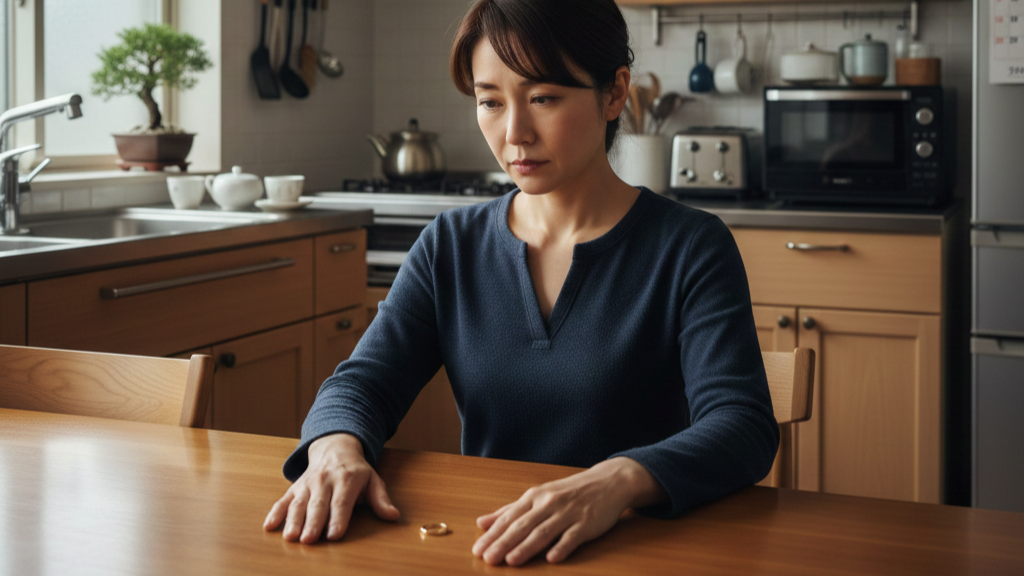
Japan likes to talk about marriage as if it were a moral good, a demographic duty, almost a civic service. Politicians mourn declining kekkon (marriage) rates the way they mourn falling birth numbers, as if romance itself were a piece of national infrastructure in need of urgent repair. But a recent survey has punctured that sanctimonious tone with something far less polite: blunt honesty. Conducted in early 2026 by the Tokyo-based matchmaking agency Presia, the poll found that around seventy percent of married Japanese women said they had regretted marrying their husband at least once. More than half said that, given a second chance, they would not marry the same man again. Cue the usual backlash: accusations of bias, hand-wringing about “negative narratives,” and defensive commentary insisting that marriage is still the cornerstone of Japanese society. Maybe the sample was limited. Maybe it skewed toward dissatisfied women. But the reaction it provoked says more than the methodology ever could.
What makes the Presia survey so uncomfortable is not the headline number, but the reasons behind it. These women are not lamenting lost romance or fading attraction. They are not complaining about looks, chemistry, or sex appeal. What they regret is life after the wedding. The slow, grinding reality that marriage was supposed to soften but often intensified instead. Money looms large. Many women say they compromised too easily on their husband’s income or financial stability, trusting that love or effort would make up the difference. Others cite clashing money habits and the stress of carrying financial anxiety alone in an economy that has offered little reassurance for decades.
Then there is the domestic front, the most stubborn battlefield of Japanese marriage. Despite endless talk of gender equality, many wives still find themselves pulled into the logic of shufu (housewife), even when they are not full-time homemakers. They work, sometimes full-time, yet remain responsible for the bulk of unpaid labour at home. Cooking, cleaning, planning, caregiving, emotional logistics — the invisible work that keeps families functioning. The government’s beloved fantasy of the ikumen (the nurturing, hands-on father) thrives in posters and policy speeches, but appears far less reliably in kitchens and living rooms. When expectations collide with reality, disappointment settles in quietly and refuses to leave.
This is where regret takes shape. Not as melodrama, but as accumulation. The kind that builds while sorting laundry late at night or renegotiating household budgets for the fifth time in a month. The kind that asks, without hysteria, whether marriage actually improved anything at all. Presia’s respondents were not raging; they were assessing.
For younger women watching this unfold, the message is clear. Marriage no longer looks like a guaranteed upgrade. It looks like a gamble whose risks fall disproportionately on women. That perception fuels growing reluctance toward kekkon, not because women reject intimacy or companionship, but because they are increasingly wary of a system that still assumes their flexibility, sacrifice, and silence.
Social values have shifted faster than social structures. Japanese women today grow up with education, careers, and a strong sense of personal autonomy. Marriage, however, still arrives bundled with outdated expectations. Adjust, endure, make it work. When women do exactly that and later express regret, society acts surprised. But the Presia survey exposes a simple truth: the problem is not women’s expectations, but marriage’s failure to meet them.
Cultural restraint adds another layer. The ethic of jishuku (self-restraint) does not stop at public behaviour; it permeates private life. Many women tolerate dissatisfaction quietly, telling themselves it is normal, that others have it worse, that marriage is meant to be hard. Admitting regret, even anonymously, already breaks a social rule. That alone makes the survey significant.
Attempts to dismiss Presia’s findings as sensational miss the larger point. Whether the figure is sixty, fifty, or seventy percent is almost irrelevant. What matters is recognition. So many women read the results and nodded. Regret here is not a personal failure; it is a structural response to imbalance. To marriages that promise partnership but deliver asymmetry. To a society that still markets marriage as a solution while ignoring the conditions that make it exhausting.
What truly unsettles policymakers is that women are no longer whispering about this. They are comparing notes. Once marriage becomes something women evaluate in terms of costs and returns, rather than destiny or duty, moral pressure loses its power. If marriage does not offer emotional equality, economic security, or shared responsibility, opting out starts to look less like rebellion and more like common sense.
The Presia survey did not invent dissatisfaction. It simply named it. Japanese women are not anti-love. They are anti-illusion. They want partnership without self-erasure, intimacy without unpaid servitude, stability without surrender. Until marriage in Japan meaningfully delivers those things, reluctance will grow, regrets will deepen, and no amount of nostalgic scolding about declining kekkon will reverse the trend. Marriage does not need saving. It needs fixing.
Auntie read that survey from the matchmaking agency Presia with a long, slow exhale. Not a gasp, not outrage — recognition. Seventy percent of married Japanese women saying they’ve regretted marrying their husband at least once? Auntie didn’t clutch pearls. Auntie nodded. Because regret, unlike heartbreak, is rarely loud. It’s domestic. It lives in calendars, bank statements, laundry baskets, and the quiet arithmetic of who does what, and who doesn’t.
What struck Auntie wasn’t the number, but the calm practicality of the reasons. Money. Housework. Responsibility. No melodrama, no tragic love stories. Just women realising that kekkon didn’t deliver what was implied. That the deal changed after the wedding, or maybe that the deal was always fuzzy and women were expected to fill in the gaps with patience and good manners.
Auntie has seen this before. Women who didn’t marry for romance alone, but for stability, companionship, a socially legible life. Women who believed in the promise of partnership — not perfection, just fairness. And then slowly discovered that “helping out” is not the same as sharing responsibility, and that being praised for doing the bare minimum is not equality. The myth of the ikumen is cute on posters. In real kitchens, it’s often a guest appearance.
What makes this moment different is that women are naming their disappointment without apology. No dramatic exits, no burning bridges. Just clarity. Regret doesn’t mean they hate their husbands. It means they are honest about the cost. And honesty, in a culture steeped in jishuku — self-restraint, endurance, swallowing things down — is quietly radical.
Auntie also notices who feels threatened by this survey. Not the women who recognise themselves in it, but the institutions that rely on women staying polite. Because once women begin to evaluate marriage the way they evaluate jobs — workload, compensation, growth, respect — the old moral pressure starts to crumble. Marriage stops being destiny and starts being a choice. A reversible one, at least in the imagination.
Auntie doesn’t read this as anti-marriage. It’s anti-illusion. Women are not rejecting love. They’re rejecting asymmetry sold as tradition. They’re rejecting the idea that compromise is noble only when women do it. If marriage in Japan wants to survive, it doesn’t need better slogans or panic campaigns. It needs to become genuinely livable.
Regret is not the enemy here. Silence is. And for once, women are choosing neither.