


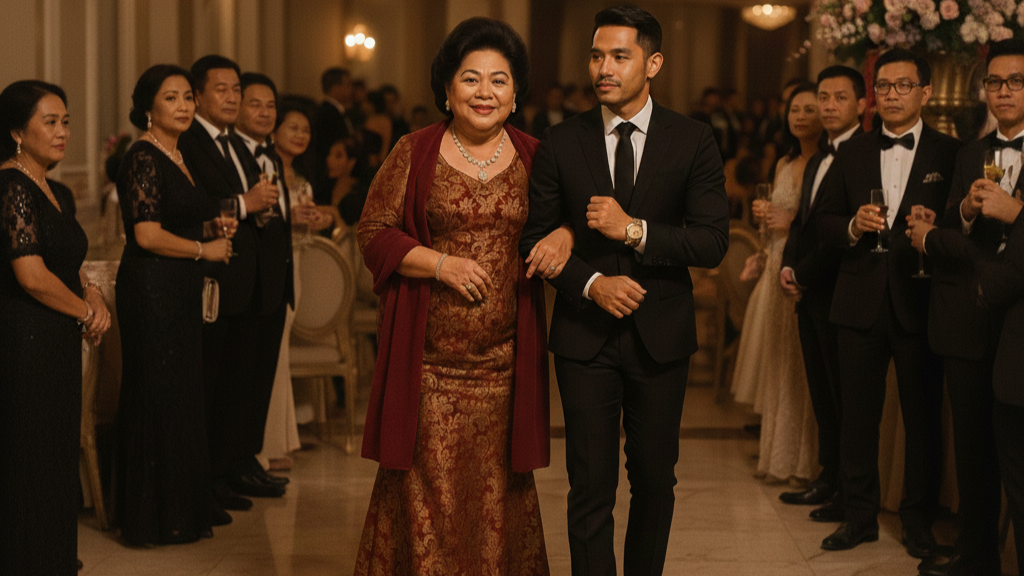
In Jakarta, desire rarely announces itself loudly. It arrives discreetly, dressed in designer batik, parked behind tinted glass, and spoken about in euphemisms. The women at the center of the Indonesian Capital’s quiet gigolo economy are often referred to as ibu-ibu or tante—terms that sound domestic, harmless, almost affectionate. Yet in elite urban usage, they signal something else entirely: seniority, money, immunity. These are women in their late forties, fifties, sometimes early sixties—married, quietly separated, or comfortably divorced—who have already performed respectability for decades and now know exactly how to bend it without breaking it.
Jakarta’s version of male escorting is not street-visible and rarely framed as “sex work” by those involved. It sits instead at the intersection of status, companionship, and controlled transgression. The men are usually in their twenties or early thirties—gym-trained, well-groomed, fluent in flirtation and emotional calibration. They may call themselves model, trainer, event companion, or simply teman jalan (walking companion). Payment is rarely discussed bluntly. It is folded into envelopes, “help,” gifts, transfers, or the unspoken understanding that time itself has a price.
The social infrastructure enabling these encounters is deeply Jakarta. Upscale cafés in Senopati or Menteng provide neutral, respectable first meetings. Five-star hotel lobbies—anonymous yet prestigious—function as transitional spaces where no one asks questions. Private apartments in gated towers complete the circuit. The city’s density works in their favor: everyone is visible, but no one is legible. A woman arriving alone at a luxury hotel is not suspicious; she is assumed to be waiting for a husband, a meeting, a life already approved.
What distinguishes Jakarta from more openly transactional cities is the role of women’s social networks, especially arisan. Officially, arisan are rotating savings and social clubs; unofficially, among elite women, they are theaters of display and information exchange. Sociologists have long noted that arisan operate as gendered power hubs—spaces where money, reputation, and gossip circulate together. Within this world, the idea of arisan gigolo persists less as a formal club and more as a whispered shorthand: a shared understanding that certain men can be “recommended,” discreetly passed along like a trusted tailor or driver.
These arrangements are not primarily about sexual novelty. Interviews with male escorts and sociological studies of gigolo subcultures in Indonesia suggest that what many older female clients seek is attention without obligation. Younger men provide admiration without competition, intimacy without inheritance, sex without lineage. In a society where women’s sexuality is still morally policed long after menopause, the gigolo becomes a technology of freedom—temporary, contained, and deniable.
Marriage complicates but does not necessarily prevent participation. For some married women, these relationships exist in emotional blind spots created by long-distance husbands, second families, or marriages that have quietly hollowed out. Divorce, meanwhile, can expand freedom but also visibility; wealth cushions both. Money does not merely buy silence—it buys interpretive control. A rich woman is rarely framed as immoral; she is framed as eccentric, lonely, or simply “strong.”
Legally, this ecosystem survives because Indonesian law focuses more on facilitation and pimping than on clients themselves. Enforcement targets intermediaries, online platforms, or public scandal—not private arrangements between consenting adults behind closed doors. Discretion, again, is the currency that matters most.
Culturally, the figure of the tante girang is often mocked in tabloids and comedy—portrayed as desperate or ridiculous. Yet that caricature misses the sociological point. These women are not rebelling loudly against patriarchy; they are routing around it. They use age, wealth, and social capital to claim pleasures that younger women would be punished for pursuing. The gigolo, meanwhile, navigates masculinity in reverse—selling charm, submission, and emotional fluency rather than dominance.
Jakarta does not celebrate this world, but it accommodates it. In a city built on hierarchies and appearances, the arrangement makes sense. Everyone involved understands the rules: be discreet, be generous, be replaceable. Desire passes quietly through air-conditioned rooms, leaves no paperwork, and returns each participant to their sanctioned public role by morning.
Nothing about this scene is revolutionary. That is precisely why it works.
I have several friends in Jakarta—well… acquaintances. Women I meet at dinners, at art openings, at those polite, exhausting lunches where everyone pretends not to notice who arrived with whom. Some of them, discreetly, unapologetically, enjoy the services—sorry, the company—of younger men. And honestly? Good for them. I’m not particularly fond of rich ibu-ibu, in Jakarta, Bogor, or anywhere else in Asia, but that’s not the point. The point is the hypocrisy. The thick, sticky, moralistic hypocrisy.
When older men do this—especially powerful, wealthy, “respectable” men—it barely registers. A middle-aged businessman with a girlfriend young enough to be his daughter is considered predictable, even boring. “Boys will be boys,” people shrug, even when the boy is sixty-two, paunchy, and emotionally illiterate. It’s framed as virility, success, proof of continued relevance. Sometimes it’s even admired. Disgusting, perhaps, but normal.
But flip the genders, and suddenly the knives come out.
An older woman with money, autonomy, and unmet desire becomes a punchline. A warning. A moral failure. She’s tante girang, desperate, ridiculous, predatory. Her sexuality is treated as a malfunction—something that should have expired along with her fertility. Desire, we are told, is not meant to age inside women. It’s supposed to dry up quietly, like a courtesy to society.
What makes this especially rich is that many of these same critics live comfortably off women’s unpaid emotional labor. Wives who raised children, managed households, endured neglect, infidelity, or polite indifference. Women who performed marriage properly for decades. When they finally step outside the script—often discreetly, without demanding public recognition—suddenly it’s a scandal.
Let’s be clear: these arrangements are not about romance or rebellion. They are transactional, yes, but so are most marriages in elite Asian circles—just with worse sex and longer contracts. At least here, the terms are honest. Time for money. Attention for discretion. Pleasure without inheritance, lineage, or moral lectures.
What truly unsettles people isn’t sex. It’s female autonomy plus age. A woman who no longer needs approval, no longer fears being left, no longer trades desire for security. A woman who understands the market and chooses her terms. That combination is far more threatening than any gigolo.
So no, Auntie is not here to defend rich ibu-ibu as saints. Many of them are insufferable. But on this? On desire, agency, and double standards? I will die on this hill in sensible shoes.
If we’re going to normalize older men buying youth and beauty, then we can stop clutching our pearls when older women buy pleasure and attention. Same transaction. Same city. Same hypocrisy.