


In a country where gender has long been treated as destiny, the legal and social standing of transgender persons in India sits at a tense crossroads between constitutional promise and everyday exclusion. From the Supreme Court’s recognition of a “third gender” to the lived realities of paperwork humiliation, police harassment, and precarious livelihoods, India’s transgender story is one of partial recognition, uneven enforcement, and stubborn social stigma. For search engines and citizens alike, keywords such as transgender rights in India, NALSA judgment, Transgender Persons Act, and hijra communities now signal a legal shift—but not yet a social one.
The turning point came in 2014, when the Supreme Court ruled that transgender persons are entitled to full constitutional protection under the right to equality, dignity, and personal liberty. Crucially, the judgment affirmed that gender identity is a matter of self-identification, not medical certification. For the first time, the state formally acknowledged identities long present in Indian society, including hijra, kinnara, aravani, and jogappa communities. The ruling spoke the language of emancipation, invoking samman (dignity) and swabhimaan (self-respect), and directed governments to ensure access to education, healthcare, employment, and welfare schemes.
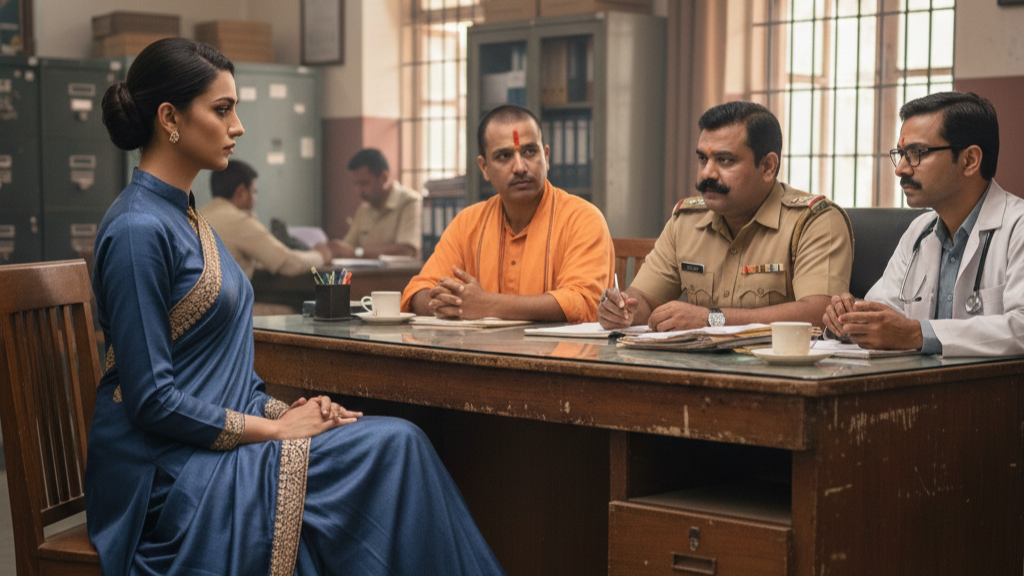
Yet when Parliament enacted the Transgender Persons (Protection of Rights) Act in 2019, many within the community felt the spirit of that judgment had been diluted. While the law prohibits discrimination in theory, it also introduced a bureaucratic certification system requiring transgender persons to apply to the District Magistrate for legal recognition. In practice, this process has often meant delays, intrusive questioning, and arbitrary decisions by local officials. For many applicants, the experience has felt less like recognition and more like surveillance. Activists argue that this undermines the very idea of self-identification promised by the courts.
Recent cases illustrate this gap between law and life. In 2023, the Madras High Court intervened after complaints that transgender applicants were being forced to submit medical proof or undergo invasive scrutiny to obtain identity certificates. The court reiterated that no surgery or medical examination could be mandated for gender recognition, reinforcing the principle of self-declared identity. Similar observations have emerged from courts in Kerala and Karnataka, where judges have repeatedly reminded authorities that the law’s intent is inclusion, not gatekeeping. These interventions, however, are reactive; relief often comes only after individuals endure months or years of denial.
Social acceptance remains deeply uneven. In urban pockets, visibility has increased, with transgender professionals working in media, law, fashion, and civil society. Some state governments have taken symbolic and practical steps, such as appointing transgender persons to advisory boards or recruiting them into public-sector roles. Kerala’s transgender policy, often cited as progressive, offers housing support, education assistance, and access to gender-affirming healthcare. Yet even there, implementation gaps persist, and many beneficiaries report difficulty navigating hostile institutions.
For most transgender Indians, daily life is shaped less by policy documents and more by social prejudice. Family rejection remains common, pushing many young trans persons out of homes and schools. Without educational credentials or family support, livelihoods often depend on informal work, badhai (ritual blessing at births and weddings), begging, or sex work—roles that are simultaneously stigmatized and culturally entrenched. This feeds a cycle in which economic vulnerability reinforces social marginalization, making legal rights feel abstract.
Violence and policing continue to be serious concerns. Reports of harassment, extortion, and assault by police surface regularly, especially against transgender women in public spaces. In recent years, several courts have taken note of custodial abuse and unlawful detention of transgender persons, emphasizing that morality policing has no constitutional basis. Yet accountability remains rare, and fear of retaliation often keeps victims silent.
Healthcare is another fault line. While national guidelines now recognize the need for transgender-inclusive services, access to respectful, affordable care is still limited. Many trans persons report being mocked, refused treatment, or placed in inappropriate wards. Mental health support is particularly scarce, despite high rates of depression and suicide attempts linked to social exclusion. The promise of care exists on paper, but prejudice at the clinic door frequently blocks it.
What emerges from India’s transgender landscape is a picture of transition without completion. The language of adhikaar (rights) has entered courtrooms and policy frameworks, but social acceptance lags behind legal reform. Each favorable judgment chips away at institutional discrimination, yet structural change remains slow, dependent on individual officials, local cultures, and sustained activism.
India has moved transgender persons from the margins of legality to the pages of law books, but recognition without respect is fragile. Until dignity is experienced not only in judgments but in ration shops, police stations, schools, hospitals, and homes, the country’s transgender citizens will continue to live in the long shadow between constitutional ideals and social reality.
I have watched India’s relationship with its transgender citizens evolve for decades, and if there is one word that keeps coming back to me, it is halfway. Halfway recognition. Halfway courage. Halfway compassion. Yes, the Supreme Court spoke beautifully about dignity and self-identification. Yes, Parliament passed a law with the right buzzwords. And yet, somewhere between the courtroom and the ration shop, between the Constitution and the District Magistrate’s office, transgender people are still being asked to prove who they are.
Let me be blunt, because Auntie has earned that right. If you truly believe in pehchaan (identity), you do not make people queue up with forms, affidavits, and the patience of saints just to exist legally. You do not hand a local official the power to decide whether someone’s gender is “real enough.” That is not recognition; that is suspicion wrapped in paperwork.
What bothers me most is how proudly India pats itself on the back for being “progressive” while outsourcing the emotional and physical cost of that progress to the most vulnerable. We celebrate hijras in mythology, invite them to weddings for badhai (ritual blessings), and then clutch our handbags when they board the bus. We quote ancient texts but ignore living bodies. Spiritual symbolism is cheap when daily survival is expensive.
And let us talk about violence—not just the spectacular kind that makes headlines, but the quiet, grinding violence of humiliation. Being laughed at in hospitals. Being refused rental rooms. Being stopped by police “for checking.” Being told, again and again, that dignity is conditional. This is not a failure of law alone; it is a failure of empathy. A failure of samaj (society).
I am also tired of the way “welfare” is used as a substitute for equality. Shelters are not a solution when families throw you out. Skill training is meaningless when employers slam doors shut. You cannot scheme your way out of stigma. You dismantle it—or you don’t.
To be fair, change is happening. Slowly. Unevenly. Some judges get it. Some officials try. Some cities are becoming safer, kinder, more breathable. But progress that depends on individual goodwill is fragile. Rights should not rely on luck.
So here is Auntie’s bottom line: India does not have a transgender problem. India has a courage problem. The courage to trust people’s words about who they are. The courage to enforce laws without moral policing. The courage to accept that gender diversity is not a modern infection but an old truth we never fully made peace with.
Recognition is not the finish line. Respect is. And India is not there yet—but it could be, if it stopped pretending that halfway is enough.