


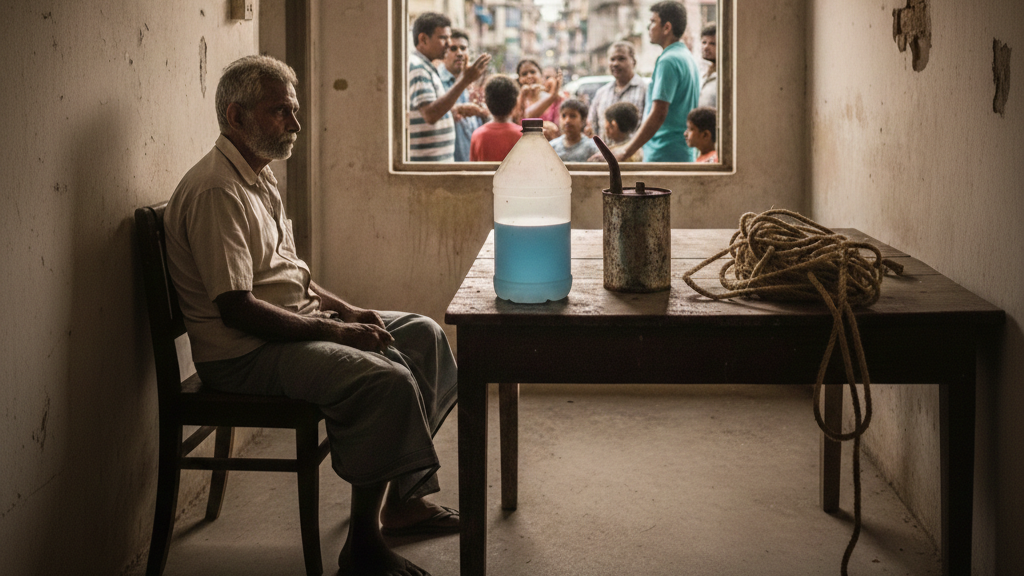
In Sri Lanka, male suicide is a pressing public-health concern shaped by long-term social, economic, and cultural pressures. After peaking in the mid-1990s, the country’s overall suicide rate has fallen significantly, yet men continue to die by suicide at rates well above global averages — a pattern that reflects deeper structural stressors and gendered help-seeking behaviours.
In the latter half of the 1990s, Sri Lanka had one of the highest suicide rates in the world, reaching as much as 47 per 100,000 people in 1995 before beginning a long decline. This peak was driven in large part by high levels of pesticide self-poisoning and limited controls on access to toxic substances. Over the next two decades, targeted public health strategies — notably restricting the most hazardous pesticides — helped drive a 70 % reduction in suicide rates, with tens of thousands of deaths averted as a result.
Fast-forward to the early 2020s, and the national suicide landscape looks very different on paper, even though the underlying pressures remain intense. According to the World Health Organization (WHO)-referenced police data for 2022, the male suicide rate in Sri Lanka was approximately 27 per 100,000 population, compared with about 5 per 100,000 for women, and an overall rate of around 15 per 100,000. This male rate stands significantly above the global male suicide rate of roughly 12 per 100,000, indicating a persistent male-biased burden.
Suicide among men in Sri Lanka is not evenly distributed across age groups. The highest rates are seen among older males, particularly those aged 55 and above, where the risk can reach as high as 65 per 100,000. Younger and middle-aged men, however, also feature prominently in official tallies, pointing to psychosocial stressors that cut across the life course.
Understanding why male suicide remains elevated in Sri Lanka requires looking beyond the numbers to the motivations and lived experiences behind them. Research and qualitative studies consistently flag several key drivers linked to male suicide: Economic stress and livelihood shocks rank among the most frequently cited pressures. As many male suicide cases in Sri Lanka’s police and health data show, job loss, debt, business failure, and agricultural hardship often precede suicide decisions. In a context with limited social safety nets and high dependence on informal work and farming, financial instability quickly undermines both daily survival and social identity.
Alcohol use and conflict escalation is another common theme. Alcohol does not cause suicide on its own, but it often intensifies domestic and interpersonal conflict, reduces inhibition, and sharpens despair. In many contact interviews and case reviews, alcohol features as a proximate factor closely preceding attempts.
Relationship breakdowns and family conflict are also significant. Arguments with spouses or family members, separations, or accusations — particularly involving money, fidelity, or property — are frequently mentioned as immediate stressors preceding male suicides. Because many Sri Lankan men are socialized to suppress emotional distress, these conflicts can escalate without intervention. Legal trouble and public humiliation constitute powerful acute triggers. Arrests, complaints to police, public accusations, or exposure of perceived wrongdoing can provoke a profound fear of shame or loss of reputation. In collectivist societies, where social standing within community and family networks matters deeply, the threat of public disgrace can be devastating.
For older men, chronic illness, disability, and loss of role are additional factors. Declining physical health and the perception of becoming a burden can erode long-held identities rooted in provision and independence. These losses, when compounded by social isolation, can increase vulnerability. Finally, masculinity norms and help-seeking barriers play a cross-cutting role. Many men see admitting to emotional distress or seeking mental health support as a weakness. This cultural stigma delays identification and intervention, meaning that by the time men present with serious distress, they are already in crisis.
Sri Lanka’s suicide prevention strategies — particularly pesticide regulation, community-based health services, and national mental health plans — have reduced overall rates since the 1990s. Still, male suicide remains a multi-layered phenomenon requiring economic support systems, accessible mental health care, community conflict mediation, and efforts to shift harmful gender norms if further progress is to be made.
I’ve spent most of my adult life working on “women’s issues,” so people sometimes assume that when men die by suicide, it’s somehow not my lane. Wrong. If you care about patriarchy, power, and how gender scripts break people, then male suicide is absolutely your business.
Let’s be clear: Sri Lanka did not magically solve suicide. Yes, the numbers came down dramatically after the horrifying peaks of the 1990s, and pesticide bans deserve real applause. But when you scratch the surface of today’s statistics, one thing hasn’t changed at all—men are still dying in far greater numbers than women, and they’re doing so quietly, stubbornly, and often alone.
What strikes me, again and again, is how predictable these deaths are. Debt. Job loss. Alcohol-fuelled arguments. Public shame. Legal trouble. Chronic illness. None of this is exotic or mysterious. It’s the slow grind of being told, your whole life, that your worth is measured by how much you earn, how well you provide, how little you complain, and how much pain you can swallow without flinching.
Sri Lankan masculinity—like masculinity everywhere—is built on silence. Men are expected to endure. To drink it off. To “be strong.” To fix problems alone. And when they fail? They don’t just lose money or status; they lose their identity. That’s the real danger zone. Suicide doesn’t arrive as a sudden impulse out of nowhere. It creeps in when a man feels exposed, humiliated, and convinced that asking for help would only make things worse.
And don’t let anyone tell you this is “just mental illness.” Of course depression exists, and yes, men need better access to mental health care. But in Sri Lanka, the data is blunt: social and economic pressures matter more than diagnoses. You can’t counsel your way out of crushing debt. You can’t therapize away unemployment, legal harassment, or the fear of becoming a burden at 60.
What frustrates me most is how rarely we talk about prevention in structural terms. Where are the serious conversations about debt relief, alcohol regulation, conflict mediation, and safe spaces for men to talk without being mocked? Where is the courage to say that masculinity itself—this rigid, punitive version of it—is part of the problem?
If feminism is about dismantling systems that harm people based on gender, then this counts. Caring about men’s suicide does not take anything away from women. It exposes the same rotten logic: endure, obey, don’t feel, don’t fail.
Men are not dying because they are weak. They are dying because they were taught that strength means suffering in silence. And that lesson, frankly, is killing them.