


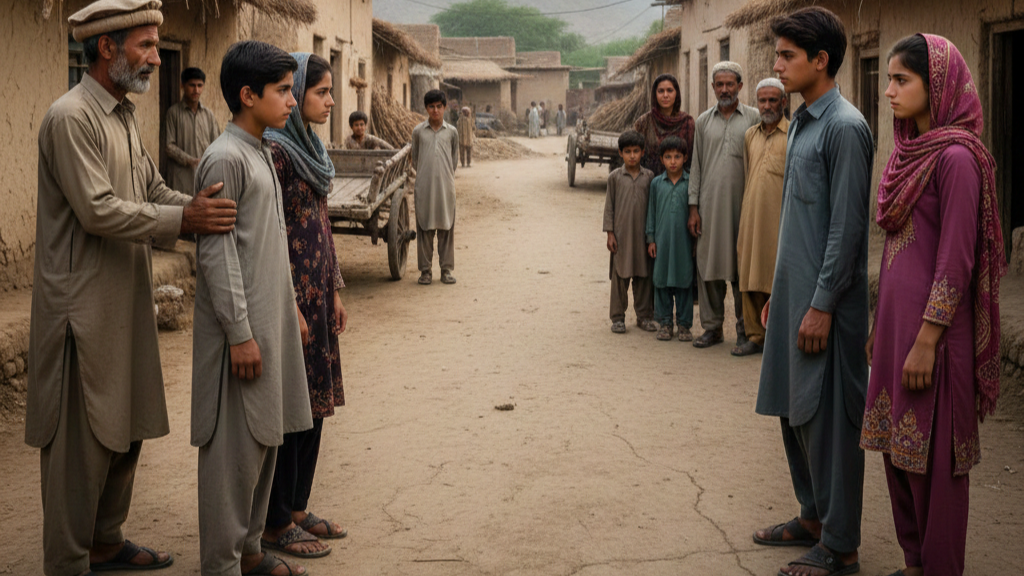
Long before hashtags and viral outrage shaped conversations about gender and power, watta satta — literally “give and take” in Urdu — quietly trapped thousands of young women in the dusty fields and narrow lanes of rural Pakistan in a system of marital exchange that treats brides like barter goods. In Punjab, Sindh and the tribal fringes of Khyber Pakhtunkhwa, families still bind their daughters’ futures to another family’s daughter as a form of social insurance, weaving complex webs of biraderi (clan) obligations, dowry avoidance and patriarchal control into one tradition that both promises order and delivers suffering.
At its core, watta satta is a bride exchange: one family marries off a daughter in return for a daughter from another family, most often pairing a brother and sister from one household with a brother and sister from another. In some cases the exchange involves cousins or other relatives if a direct sibling pair isn’t available, but the basic logic is the same — to marry your son, you must also offer your daughter in return. This system, deeply rooted in feudal and tribal cultures, can account for about a third of all rural marriages in parts of Pakistan and is especially prevalent among blood relatives living in the same village or community.
To outsiders, the arrangement sometimes appears to offer a crude form of protection: because each family’s honor is linked to how well the exchanged women are treated, the theory goes that a man will restrain himself from abusing his wife if mistreating her could lead to retaliation against his own sister. World Bank–linked research by economists Hanan Jacoby and Ghazala Mansuri even suggests that, after accounting for selection factors, some measures of marital discord — including estrangement, domestic abuse and wives’ mental well-being — appear lower in watta satta marriages compared with conventional ones.
But this academic balance sheet misses the human cost. In practice, watta satta often means women’s consent is sidelined or ignored, particularly where literacy is low, poverty is high and tribal elders or fathers dictate the terms of marriage. Girls and young women have little say in whether they marry the man chosen for them — or even how old they are when they do. A 2016 account documented by The Deccan Chronicle tells of Saima, a teenage girl in southern Punjab who was given in exchange for another woman, her age debated and her agency absent, simply to satisfy a father’s desire for a male heir and a wife for his sister.
For many women, the very mechanism meant to enforce restraint becomes a hostage-like system. If a wife complains about violence or mistreatment, her family faces the specter of reprisals against their own daughter — a double bind that often leads women to endure abuse silently. Domestic violence scholars note that this reciprocal punishment logic leaves women with very little bargaining power, as escaping the marriage could imperil their brother’s or sister’s well-being in the exchange family. Divorce, heavily stigmatized in rural Pakistani society, compounds these constraints.
The dangers of watta satta extend far beyond emotional distress. In 2020, the brutal killing of Waziran Chhachhar after a marriage dispute linked to a watta satta bride exchange sparked outrage across Pakistani social media, highlighting how the practice can fuel lethal violence when familial tensions boil over. In another reported case, a young woman in Sindh province was tortured to death in a conflict involving her exchanged marriage, forcing authorities to arrest male relatives in a rare move against a deeply entrenched tradition.
Critics argue that watta satta does more than just reflect rural Pakistan’s economic and social realities — it reinforces patriarchal norms and suppresses women’s autonomy. A 2015 social research study in southern Punjab identified illiteracy and poverty as major drivers of the practice, with families often viewing the exchange as a necessary way to maintain economic stability and social cohesion even as it undermines individual rights.
Yet change is stirring, however slowly. Women’s rights activists and grassroots NGOs are working in villages to raise awareness about consent, legal rights and the harms of forced marriages. Legal reforms exist on paper prohibiting child and forced marriage, but enforcement is weak in rural districts where tribal customs still wield enormous influence.
In a society where honor (izzat) and family prestige often eclipse individual choice, watta satta remains a powerful lens on how gender, tradition and power intersect. Its persistence shows that until women have equal standing in decisions about their own lives, customs like watta satta will continue to shape — and sometimes shatter — the futures of countless Pakistani girls.
Spicy Auntie is adjusting her chili-pepper necklace and taking a very deep, very angry breath. Because nothing makes my blood boil quite like a system that dresses up the trafficking of girls as “tradition” and then pretends it’s about family harmony. Watta satta — “give and take,” as if we’re talking about mangoes in the market — is actually a hostage exchange of women, wrapped in the polite language of marriage.
Let’s call it what it is. Two families look at their daughters and say: you will marry their son so our son can marry their daughter. Your body, your future, your safety become bargaining chips. And then people have the nerve to tell me this somehow protects women, because if one husband is cruel, the other family will “retaliate.” Oh yes, lovely logic — so instead of stopping abuse, we just create a system where two women are now blackmailed into silence. Very progressive. Very humane.
Imagine being beaten by your husband and knowing that if you speak up, your brother’s wife — a woman you probably grew up with — will be punished in return. That is not protection. That is emotional torture with a rural Pakistani accent. This is izzat (honour) culture weaponized, turning women into shock absorbers for male violence.
And don’t get me started on “choice.” In most watta satta marriages, girls are married young, sometimes barely teenagers, with no real say in who they marry. Poverty, biraderi (clan pressure), and fathers obsessed with reputation do the talking. The girl just signs her life away — or more often, doesn’t even get to sign.
Of course, academics sometimes point out that statistically, some women in these marriages report fewer separations or slightly less violence. I don’t doubt the numbers. But let me ask you something: if you cannot leave, if your suffering will destroy another woman’s life, is staying really “less violent,” or just more trapped? Silence is not safety. Endurance is not consent.
What makes this even uglier is that watta satta survives not because it is moral, but because the state has abandoned rural women. No functioning legal protection, no shelters, no real economic independence. So families invent their own brutal little insurance scheme, where girls pay the premium.
Pakistan has women flying planes, running courts, and marching for their rights. Yet in villages, girls are still being traded like livestock because men are too afraid of each other to behave decently.
So no, Spicy Auntie is not buying the “cultural nuance” excuse. Culture that depends on sacrificing girls is not heritage — it is cowardice dressed up as tradition. And every woman trapped in watta satta deserves more than to be somebody else’s collateral.