


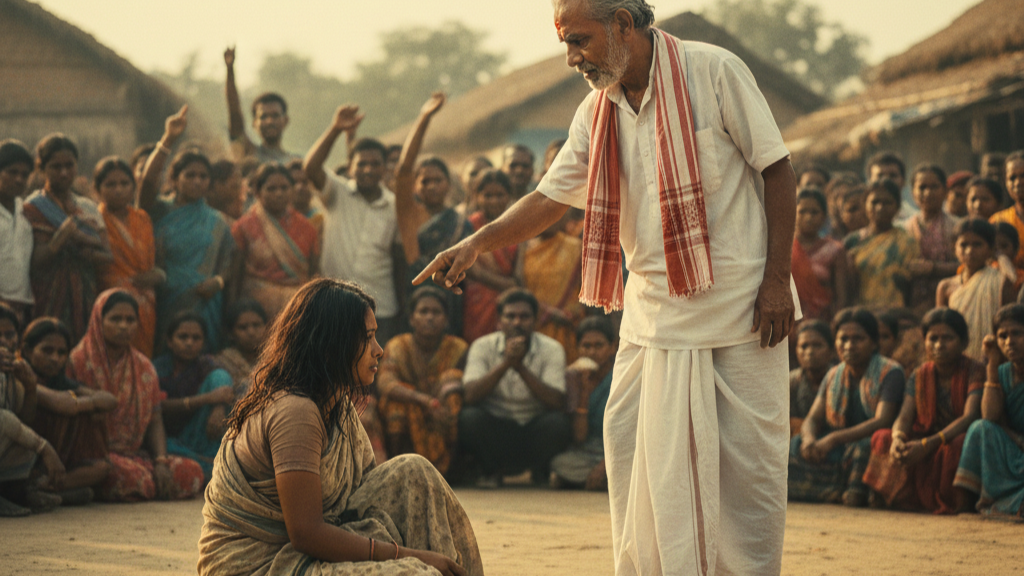
In the lush floodplains and forested villages of Assam, stories of illness, death, and misfortune are still sometimes explained not through medicine or chance, but through whispers of witchcraft. Locally framed as dāin (डायन, “witch”) or acts of tona-totka (टोना-टोटका, “black magic”), these beliefs have deadly consequences. In recent years, Assam has repeatedly made national headlines for brutal mob attacks in which women were beaten, stripped, burned, or killed after being accused of practicing witchcraft. For search engines and human rights defenders alike, the keywords recur with grim regularity: witch-hunting in Assam, mob violence, superstition, gendered killings.
The pattern is chillingly consistent. A child falls ill. Livestock die. Crops fail or a neighbour suffers sudden death. In communities with limited access to healthcare, education, or legal recourse, fear seeks an explanation. A woman—often widowed, elderly, outspoken, or in possession of land—is identified as the cause. Once labelled a dāin, she is no longer a neighbour but a threat, someone whose presence must be “purified” from the village. What follows is not a private act of violence but a public performance: crowds gather, accusations are shouted, and punishment is carried out collectively, giving everyone a share in both the crime and its justification.
Recent cases underline how contemporary this violence remains. In the past two years alone, Assamese media and national outlets have reported multiple incidents in districts such as Goalpara, Chirang, Kokrajhar, and Sonitpur, where mobs tortured women to death on suspicions of witchcraft. In one widely reported episode, a couple was dragged from their home and beaten and burned alive after villagers claimed they had caused illness through black magic. In another, a woman was publicly humiliated and killed following a ojha (ओझा, “traditional healer”) declaring her responsible for a neighbour’s death. These are not isolated events but part of a pattern that continues despite legal reforms.
Cultural context matters, but it does not excuse the violence. Assam’s diverse tribal and rural communities have long traditions of animism, spirit worship, and folk healing. Belief in malevolent forces—bhūt (भूत, “spirit”) or bajāra—exists alongside mainstream Hindu practices. The ojha or village healer often occupies a position of authority, diagnosing supernatural causes where modern medicine is absent or distrusted. When such figures name a woman as a witch, their word can carry more weight than that of the police or courts. Patriarchy amplifies this danger: women who do not fit expected roles, who lack male protectors, or who challenge property norms are easier targets.
Land and power sit quietly beneath the surface of many accusations. Human rights investigations in Assam have repeatedly shown that witchcraft allegations are frequently used to settle personal vendettas, seize land, or silence women asserting inheritance rights. Branding a woman a dāin strips her not only of dignity but of legal and social protection, making dispossession appear righteous. In this way, superstition becomes a tool—less about belief than about control.
The state has not been entirely passive. Assam enacted the Witch Hunting (Prohibition, Prevention and Protection) Act in 2018, criminalising witch-hunting and making it a non-bailable offence. The law allows for prison sentences for those who accuse, instigate, or participate in such violence. Yet enforcement remains uneven. Arrests often come after deaths, not before attacks, and fear of retaliation silences potential witnesses. Laws on paper struggle against collective belief, local power hierarchies, and the speed with which mob violence erupts.
Against this darkness stand stories of resistance. Activists, educators, and grassroots organisations continue to challenge witch-hunting through awareness campaigns, school programmes, and support for survivors. The late Birubala Rabha, a renowned anti–witch-hunting activist from Assam, spent decades confronting villages and rescuing accused women, proving that cultural change, while slow, is possible.
Witchcraft-related violence in Assam is not a relic of the past or a curiosity of folklore. It is a living, gendered crisis rooted in inequality, fear, and silence. Until healthcare reaches the margins, women’s property rights are protected, and superstition is no longer allowed to masquerade as justice, the word dāin will continue to echo—not as myth, but as a death sentence whispered too easily in the dark.
Spicy Auntie here. Sit down, pour some tea, because this is not a ghost story. This is about women. Real women. Flesh-and-blood women whose only crime was being inconvenient in societies that prefer women quiet, obedient, and disposable.
Across India and many parts of Asia, “witchcraft” and “black magic” are not quaint superstitions whispered by grandmothers. They are weapons. They are accusations sharpened like knives and aimed, again and again, at the same bodies: widows, older women, women without sons, women with land, women who speak too loudly, women who live alone, women who refuse to bow. Call her a witch and suddenly anything becomes permissible. Strip her. Beat her. Burn her. Kill her. Take her land. Sleep well at night, because the village agreed it was necessary.
In Assam, in Jharkhand, in Odisha, in parts of Nepal, Bangladesh, Indonesia, Papua New Guinea, even pockets of Africa and the Pacific, the pattern is sickeningly familiar. A child gets sick. A cow dies. A man drinks himself into illness. Someone needs an explanation that doesn’t challenge power, patriarchy, poverty, or a broken health system. Enter the witch. Always female. Almost never young and protected. Never powerful in the right way.
Let’s be very clear: this is not about belief in spirits. Plenty of cultures believe in spirits without killing women. This is about control. Witchcraft accusations flourish where women’s lives are already cheap, where courts feel distant, where police are feared or bought, where men’s authority is fragile and easily threatened. Calling a woman a witch is the fastest way to erase her humanity and redistribute her property.
And no, this is not “rural ignorance” versus “modernity.” Modern India has smartphones, AI startups, and space missions—and still women are dragged into fields and beaten to death by mobs chanting ancient fears. Asia builds megacities and still tolerates medieval punishments when the victim is female. Progress that leaves women behind is not progress. It’s cosmetic surgery on a rotten system.
What breaks my heart most is the loneliness of these deaths. These women often die surrounded by people they have known their whole lives. Neighbors. Cousins. Sometimes even children. Silence is communal. Violence is shared. Responsibility evaporates.
So when I hear officials talk about “awareness campaigns” without land reform, healthcare, legal protection, and serious consequences for perpetrators, I roll my eyes so hard I risk a headache. Laws matter. Education matters. But power matters more.
Spicy Auntie’s message is simple: witches don’t exist. Misogyny does. And as long as societies keep dressing gender violence in the costumes of superstition, women will keep paying with their bodies. Enough.