


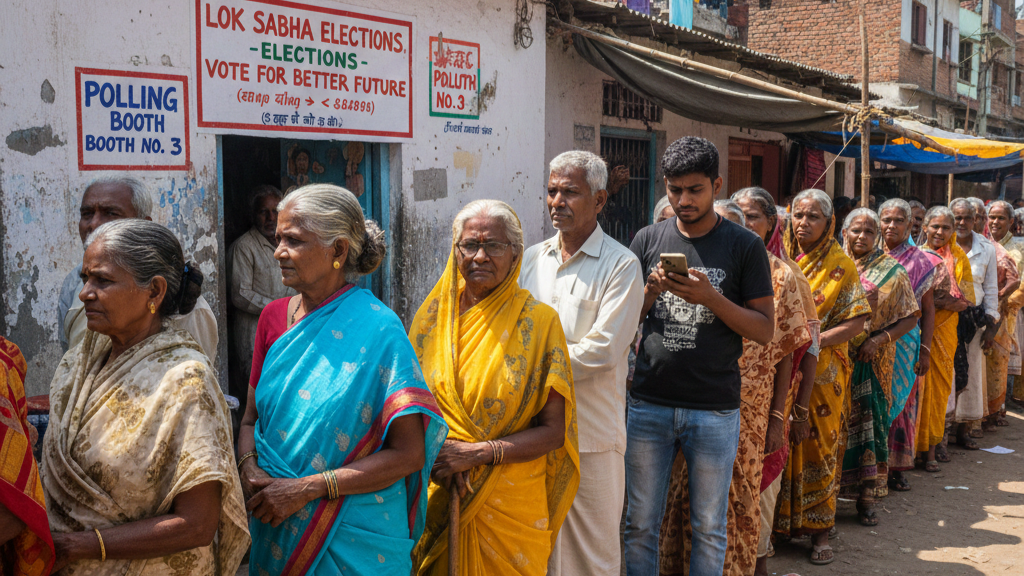
India’s elections are often described as a battle for the youth vote, yet a subtler but potentially decisive force has quietly been reshaping electoral politics: the senior citizens’ vote, or India’s ‘grey vote‘. As the country’s matrubhoomi (motherland) ages, with citizens over 60 forming a growing share of the electorate in many states, political parties have begun to realize that the wisdom and stability of elder voters could tip the balance in tight races — especially in key battlegrounds in the Assam, Kerala, Tamil Nadu, West Bengal and Puducherry assembly elections in 2026.
The grey vote is no longer a fringe concept. In several regions, senior voters already rival the youth in sheer numbers on the electoral roll, a demographic twist that has prompted parties to rethink their strategies and manifesto priorities. Traditional political wisdom once held that naujawaan (young people) would dominate India’s political future, yet the steady rise in the proportion of older electors is forcing campaign strategists to manage dual narratives: one that appeals to the aspirations of yuvajan (young citizens) and another that respects the experience and values of India’s seniors.
This shift comes against the backdrop of a broader demographic transformation. While India’s median age remains lower than many industrialized nations, the population over 60 is growing faster than before. The socio-cultural context helps explain why this shift matters so much. In Indian society, elders are traditionally seen as guardians of sanskaar (values and cultural norms), decision-makers whose opinions influence not just their own votes but often those of younger family members — a factor political analysts sometimes call pariwarik prabhav (family influence). As such, winning the trust of older voters can create ripple effects within multi-generational households at the polling booth.
The Election Commission of India (ECI) has also taken steps to make voting more accessible for elders, reinforcing the idea that every voice — regardless of age — truly counts. In the 2024 Lok Sabha elections, for example, voters aged 85 and above were offered optional home voting facilities, a landmark initiative that combined respect for elder dignity with practical accessibility. Meanwhile, there have been administrative innovations like extending postal voting age limits for seniors, further acknowledging their importance.
Yet seniors are not a monolithic group, and gender adds a vital layer of complexity. While overall electoral participation among elderly men and women may be high, deep-rooted gender norms historically constrained women’s bahar jaane (public mobilization). Women — especially older women — often face barriers to political engagement due to mobility limitations, economic dependence, and traditional expectations regarding their role within the household. But as broader patterns of women’s political participation evolve in India, more elderly women are asserting their voting rights not just as a civic duty but as an expression of agency.
This generational intersection with gender empowerment is significant. The last few general elections saw a remarkable increase in women’s turnout, with female voters participating at rates that finally matched or even exceeded those of men. Yet women’s descriptive representation — that is, the number of women as candidates and elected officials — remains disproportionately low. For older women, the stakes are especially high: they carry lived experience of decades of social norms that once kept them away from public political space, and their vote now symbolizes both personal agency and collective progress in India’s democratic journey.
In this context, dharma (a sense of duty) resonates powerfully with senior voters. Many see voting not just as a constitutional right but as a moral responsibility, a continuation of their lifelong commitment to community, family and nation. This cultural weight makes the grey vote one of the most intriguing and consequential forces shaping electoral politics today.
As India marches toward ever more competitive elections, parties that underestimate the political clout of elders — especially elder women, whose voices have long been under-heard — may find themselves caught off guard. In the dynamic tapestry of India’s democracy, the grey vote is proving that experience, tradition and evolving gender norms together can make India’s seniors quiet but powerful neta-makers (kingmakers) of the future.
Spicy Auntie here, adjusting her reading glasses and sipping her morning chai, watching India’s politicians trip over themselves chasing first-time voters, influencers, and viral reels — while quietly ignoring the aunties and uncles who actually show up on election day. You know, the ones with knee pain, blood pressure pills, and a stubborn commitment to democracy that survives heatwaves, broken pavements, and polling booths with no chairs.
Let me say this slowly, for those at the back of the campaign bus: seniors vote. Religiously. Methodically. With memory. While younger voters are still deciding whether to boycott, protest online, or sleep in, the elders are already inked, stamped, and home for lunch. That grey vote is not nostalgic fluff — it’s political muscle wrapped in cotton saris and well-ironed shirts.
And here’s what many parties miss: seniors don’t vote only for themselves. In India’s pariwar (family) culture, elders are still informal opinion editors. Dinner-table conversations matter. When a grandmother says, “This leader doesn’t respect izzat (dignity),” it echoes through three generations. That is influence you cannot buy with Instagram ads.
Now let’s talk gender, because Auntie always does. Elderly women are the most underestimated voters in this country. These women lived through ration cards, Emergency years, dowry violence, unpaid labour, and the long silence around women’s bodies and rights. They know the cost of bad governance in their bones. When they vote, it’s not symbolic — it’s personal. Healthcare, pensions, widow benefits, water access, safety in public spaces: these aren’t “soft issues” to them. They are survival issues.
And yet, older women are still treated like passive dependents rather than political actors. The irony? Many of them are more politically consistent than their husbands. While men flirt with ideology and television debates, women ask one brutal question: Kaun kaam karega? (Who will actually deliver?) That’s not cynicism. That’s wisdom earned the hard way.
I’m also watching something quietly radical happen. More elder women are voting alone, deciding alone, thinking alone. For some, it’s the first private political choice of their lives. That ballot becomes a small rebellion — against sons who mansplain politics, against husbands who assume agreement, against parties that forget them until election week.
So here’s Auntie’s unsolicited advice to political strategists: stop talking at seniors and start listening. Respect their lived experience. Speak about care, dignity, ageing without fear, and social security without charity. And if you really want to win, talk directly to older women — not as beneficiaries, but as citizens.
Because India’s future is not decided only by who shouts the loudest online. Sometimes, it’s decided quietly, decisively, by someone who’s seen enough to know exactly where to press the button.