


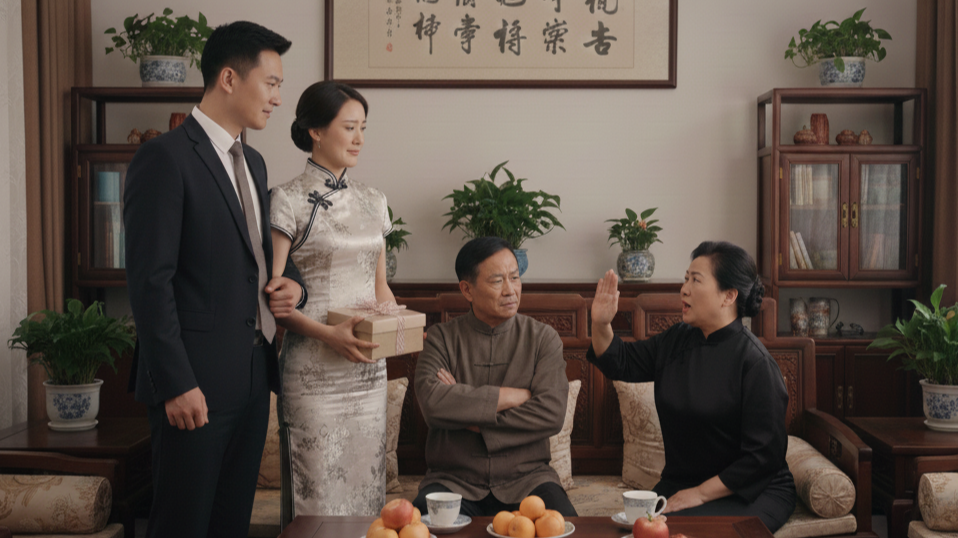
In today’s China, where marriage rates are falling and divorce is rising, old ideas about women’s “moral value” refuse to die. Search online for dating advice, scroll through family chat groups, or listen to well-meaning relatives at Lunar New Year, and you will still hear echoes of an ancient belief: that it is better to marry a widow than a divorced woman. This prejudice, rooted in Confucian morality and patriarchal family structures, continues to shape how widowed and divorced women are judged, even as modern Chinese society loudly claims to have moved on.
The traditional saying often quoted in this context—宁娶寡妇,不娶生妻 (ning qu gua fu, bu qu sheng qi), loosely translated as “better to marry a widow than a living wife who was dismissed”—encapsulates centuries of moral thinking. In imperial China, a widow (寡妇, guǎfù) was seen as a woman whose husband had died through fate, not failure. Her chastity and loyalty, especially if she never remarried, could elevate her to near-saintly status. Some widows were publicly honoured for 守节 (shǒujié), remaining faithful to a dead husband for life, even when that meant poverty or loneliness.
A divorced woman, by contrast, carried the heavy stain of perceived fault. Divorce was traditionally initiated by men and justified through doctrines such as the 七出 (qī chū), the “seven grounds for dismissal,” which included failure to bear a son, disobedience, jealousy, or “excessive talk.” Even when a woman was abused or neglected, divorce marked her as morally suspect, someone who had failed in her duties as a wife. The term 生妻 (shēng qī) itself implies disgrace: a woman returned to her natal family while still alive, her marriage effectively dead.
These ideas did not disappear with the fall of the empire. They lingered quietly through the Mao era and resurfaced with force during China’s market reforms, when marriage once again became tightly linked to social status, property, and family reputation. In contemporary matchmaking culture, divorced women are often described with coded language: “complicated,” “used,” or “with history.” Widows, though fewer in number today, are sometimes treated with more sympathy, framed as unlucky rather than problematic.
Modern prejudice takes subtler forms. On dating apps, divorced women report being asked intrusive questions about why their marriage failed, whether they are “emotionally damaged,” or if they will bring “trouble” into a new family. Parents arranging blind dates may quietly filter out divorced women, worrying about 面子 (miànzi, family face) or future conflict with in-laws. Even popular culture reinforces these tropes, frequently portraying divorced women as bitter, demanding, or overly independent, while widows are cast as tragic and pure.
Yet something is shifting. On platforms like 小红书 (Xiaohongshu) and 微博 (Weibo), divorced women increasingly tell their own stories. Some post photos holding their divorce certificates, reframing them as 离婚证也是重生证 (líhūn zhèng yě shì chóngshēng zhèng), “a divorce certificate is also a rebirth certificate.” Others openly discuss leaving abusive marriages, rejecting the idea that endurance equals virtue. These narratives challenge the old moral hierarchy that ranked women by marital outcome rather than lived experience.
At the same time, state policies promoting marriage and childbirth sometimes reinforce conservative attitudes, indirectly reviving pressure on women to “make marriage work at all costs.” This creates a tension: women are legally free to divorce, yet socially punished for doing so. Widows may still receive sympathy, but divorced women must constantly justify their choices, proving they are not morally defective.
The prejudice against widowed and divorced women in China is ultimately less about marital status than about control. It reflects a long-standing discomfort with female autonomy, especially when women step outside prescribed family roles. A widow who remains chaste is admired because she poses no challenge; a divorced woman who chooses herself disrupts the script.
As China grapples with demographic decline and changing gender expectations, these old beliefs are being questioned more openly than ever before. But they have not vanished. They linger in language, in matchmaking markets, and in family conversations whispered over dinner tables. The real transformation will come not when divorce becomes common—because it already is—but when a woman’s worth is no longer measured by how, or with whom, her marriage ended.
Asian proverbs are like old furniture: heavy, ugly, always in the way, but nobody dares throw them out. One of China’s favourites goes something like this: better to marry a widow than a divorced woman. Every time I hear it, I want to ask: better for whom, exactly? Certainly not for women, who are once again neatly sorted into moral boxes designed by men who never risked being placed in one themselves.
Let’s be clear. This is not about love, compatibility, or kindness. It’s about control. The widow is considered “safe.” Her husband is dead, she didn’t choose to leave, and ideally she remains 忠贞 (zhōngzhēn, loyal) to a ghost for the rest of her life. No opinions, no demands, no inconvenient independence. Tragic, yes, but socially acceptable. The divorced woman, however, committed the ultimate sin: she exited. She said “no more.” She broke the script.
Patriarchy hates exits. It prefers women who endure quietly, even if they are miserable, beaten, or slowly disappearing inside a marriage. That’s why a widow who sacrifices her future is praised for virtue, while a divorced woman who saves her sanity is interrogated like a criminal. What did you do wrong? Were you too strong? Too loud? Too ambitious? Too unwilling to swallow nonsense with a smile?
I have met divorced Chinese women who are brilliant, funny, financially independent, emotionally mature—and exhausted by the constant need to explain themselves. To parents. To dates. To colleagues. To random aunties in elevators. Meanwhile, nobody asks men why their marriages failed. Funny how that works.
And don’t let anyone tell you this is “just tradition.” Traditions are not neutral. They are tools. This one was designed to keep women obedient, afraid of social exile, and permanently anxious about reputation. Face over happiness. Endurance over dignity. Silence over truth.
What gives me hope is that more women are laughing at these old sayings instead of internalising them. Posting their divorce certificates like graduation diplomas. Calling divorce 重生 (chóngshēng, rebirth). Choosing peace over performance. Refusing to audition for the role of “good woman” in a play written centuries ago.
So here’s my message, from one Auntie to another generation: if society prefers a woman married to a dead man over a woman who chose life, then society is the problem. Not the women. Never the women.