


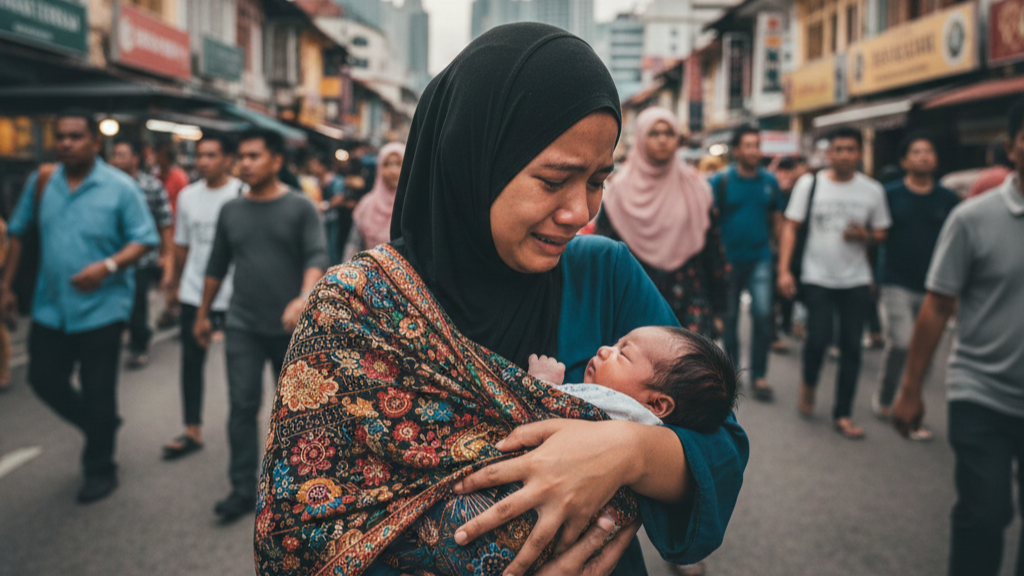
Malaysia’s new “Mother’s Home” in Sabah is being pitched with a phrase that’s both heart-tugging and search-friendly: a safe place for mothers in crisis before desperation turns into buang bayi (baby abandonment). Opened in late September 2025 at Taman Kingfisher, Sulaman, the facility—branded Rumah Ibu (Mother’s Home)—is described as Southeast Asia’s first of its kind, offering temporary accommodation plus wraparound support to vulnerable mothers and their children, and it is managed locally by Mother’s Home International Berhad in coordination with Sabah’s welfare authorities.
To understand why this matters in Malaysia, you have to talk about ibu tunggal (single mothers) and the social weather they live in. The country has long wrestled with baby-dumping cases, and police statistics reported 75 cases between January and September 2024 (down from 96 in the same period in 2023)—numbers that are sobering precisely because each case is a story of fear, secrecy, and a woman running out of options. Media and advocates have repeatedly linked the problem to stigma around pregnancy outside marriage—anak luar nikah (child born out of wedlock)—and the harsh social consequences that can follow: family rejection, community shaming, job loss, and a pervasive dread of legal trouble.
This is the pressure-cooker “Mother’s Home” is trying to release. The Sabah centre can house a small number of residents—reported as up to seven mothers, typically aged 18–35, sometimes with one or two children—who can stay for up to six months, with flexibility depending on individual circumstances. The model is not simply “a roof”; it’s a structured attempt to keep mother and child together while stabilising the mother’s life: medical and psychological support, legal counselling, and practical training aimed at employment and independent living. In other words, it addresses the real-world gap between “don’t abandon your baby” and “here is how you survive if you keep your baby.”
Malaysia already has partial safety nets, but they often work like emergency exits rather than full pathways. The best-known is the “baby hatch” (peti/ruang perlindungan bayi, in common usage), run largely through NGO–hospital partnerships; the Bernama news agency has described these as life-saving interventions and stressed they should not be seen as promoting “immorality.” OrphanCare-linked reporting in 2025 claimed more than 700 babies have been saved via the hatch programme and that stigma and lack of support are common drivers behind relinquishment. But hatches, by design, are downstream solutions. A Mother’s Home is upstream: it tries to catch a crisis while there’s still time for jaga anak sendiri (to keep and raise one’s own child) without being crushed by economics or shame.
Policy-wise, Malaysia’s support for vulnerable mothers is spread across welfare aid, programme-based empowerment, and ad hoc shelter capacity. The government’s MyGov portal directs low-income families to Social Welfare Department (JKM) assistance channels, reflecting the formal pathway for financial and case support. In 2025, Bernama also reported KPWKM’s KasihnITa initiative targeting single mothers with training in areas like legal matters and financial management—useful, but still not a substitute for crisis housing and confidential, non-judgmental casework when a woman is pregnant, panicked, and hiding.
A brief Southeast Asian comparison shows how distinctive (and how overdue) this Sabah model is. In the Philippines, the state has leaned toward legal “safe haven” frameworks; Republic Act No. 11767 (2022) formalises safe-haven provisions for infants and treats relinquished infants as foundlings under the law, aiming to reduce risk and uncertainty around surrender. Indonesia, meanwhile, is marked by a patchwork of civil-society responses: Channel NewsAsia reported on Bali Baby Home rescuing abandoned babies while also trying to protect at-risk women facing unwanted pregnancies—similar logic to Sabah’s Mother’s Home, but driven more by local initiative than a clearly standardised national model.
Sabah’s “Mother’s Home” is small, but culturally significant: it treats the ibu tunggal not as a moral lesson or a statistic, but as the centre of the intervention. In a region where single motherhood is often managed through silence, punishment, or last-resort surrender, that shift—from shame to support—may be the most radical “service” the building provides.
Let’s stop pretending that baby abandonment in Southeast Asia is a story about “bad women.” It’s a story about bad systems, suffocating stigma, and societies that punish women for sex, pregnancy, poverty, and honesty—often all at once. When an Asian woman abandons a child, she is almost never acting out of coldness. She is acting out of fear. And that fear is carefully, patiently manufactured.
In much of Southeast Asia, being a single mother is not just a life situation—it’s a social verdict. Ibu tunggal, me chưa chồng, แม่เลี้ยงเดี่ยว, unwed mother—different languages, same undertone: suspicion, shame, moral failure. Families whisper. Employers judge. Neighbours police. Religious figures preach about “consequences.” Governments say they care, but often show up only after the crisis, clipboards in hand, questions sharp as knives. Meanwhile, the woman is expected to be endlessly strong, endlessly moral, endlessly invisible.
So let’s talk honestly about what it means to be forced to abandon a child. Not “choosing” to. Forced. Forced by parents who threaten expulsion from the home. Forced by partners who disappear the moment the test turns positive. Forced by bosses who fire quietly. Forced by laws that criminalise abortion but romanticise motherhood. Forced by a culture that worships the baby but despises the woman who carried it.
Abandonment, in this context, is not failure—it’s a last, desperate act of survival. It’s a woman calculating risk in the dark: keep the child and lose shelter, income, safety; or give the child up and hope—hope—that someone kinder will step in. That is not moral weakness. That is triage.
What infuriates me most is the hypocrisy. Southeast Asian societies love to talk about “family values,” yet routinely break women away from their own families at the moment they need them most. We love to talk about “protecting children,” yet we punish the very mothers who could protect them if only they were supported rather than shamed. We build baby hatches, then act shocked that women use them. We criminalise abandonment, then create the conditions that make it inevitable.
That’s why spaces like Mother’s Home matter—not because they are charity, but because they interrupt cruelty. They say to women: you are not dirty, you are not alone, and you do not have to disappear for your child to live.
The real scandal is not single motherhood. The real scandal is a region that still thinks shame is an effective social policy.