


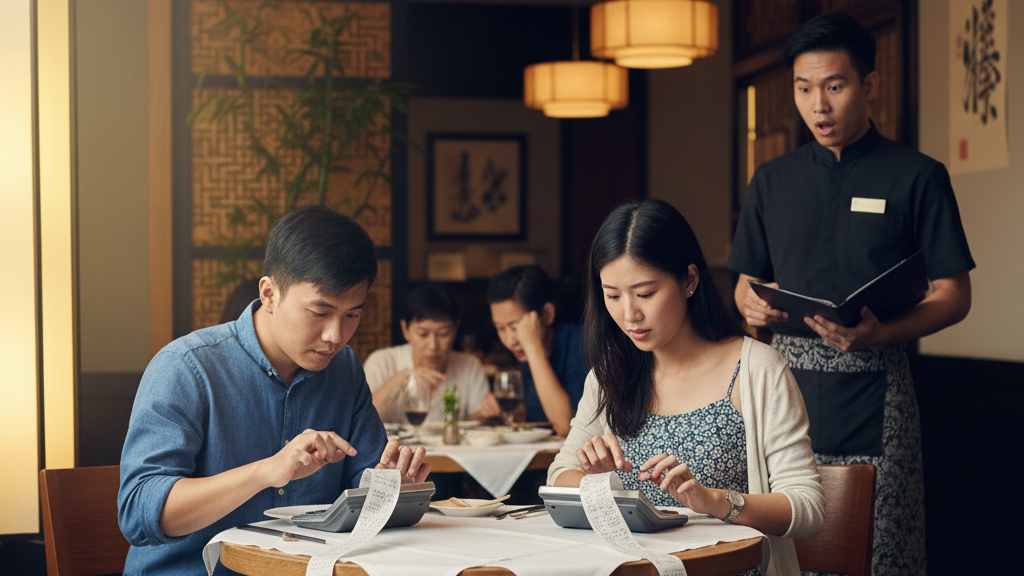
In Singapore dating discourse, few topics ignite keyboards faster than who pays for dinner, who texts first, and whether modern romance has become a competitive sport with spreadsheets and expectations. The city-state’s changing relations between men and women are now playing out less in candlelit restaurants and more in comment sections, where courtship norms collide with gender equality, rising costs, and a distinctly Singaporean pragmatism.
At the heart of the debate is money, always money. Singapore is expensive, and dating is no exception. A casual dinner, a cocktail or two, and a Grab home can quietly approach the price of a utility bill. Against this backdrop, some men are asking why they are still expected to pay on first dates, while some women reply that chivalry hasn’t been repealed just because women now earn their own salaries. The argument quickly escalates into talk of “traditional values” versus “modern equality,” as if romance were a constitutional amendment. Social media amplifies every hot take, and suddenly a single date’s bill becomes a referendum on gender relations in the Lion City.
Cultural expectations muddy the waters further. Singaporean society has long blended pragmatism with tradition. In Mandarin-speaking households, the idea of 男主外,女主内 (nán zhǔ wài, nǚ zhǔ nèi – men outside, women inside) may no longer describe daily life, but its shadow lingers in dating scripts. Malay culture still prizes sopan (politeness) and gentlemanly behaviour, while Indian families often expect men to demonstrate responsibility early, including financial generosity. Add Singlish into the mix and you get blunt negotiations disguised as jokes: “You pay first, can?” followed by a strategic laugh and a “see how lah” (let’s see).
Women, for their part, are navigating a contradictory landscape. Singapore boasts high female education and workforce participation, yet dating expectations often lag behind economic reality. Many women insist they are happy to split the bill, but bristle at being judged as “calculative” (a particularly Singaporean insult) if they do. Others argue that paying is not about dependency but about effort, a signal that the man is invested. In a city where efficiency reigns, romance risks being assessed like a job interview: initiative, reliability, and yes, willingness to foot the bill.
Men, meanwhile, increasingly voice their own anxieties. Some feel squeezed between old expectations and new rules they are not entirely sure they understand. They are told to be sensitive, emotionally open, and supportive, while also being decisive, confident, and financially generous. When frustration spills online, it sometimes takes the form of exaggerated claims that men are now “second-class citizens,” a phrase guaranteed to provoke outrage. Critics point out that systemic gender inequalities still favour men in many ways, but the emotional reality of dating fatigue is real, especially in a hyper-competitive city.
Technology has accelerated these tensions. Dating apps turn courtship into a marketplace where profiles are filtered in seconds and first impressions are brutally transactional. A good job, a gym photo, a witty bio, and preferably no red flags about money. Ghosting is common, expectations are high, and patience is in short supply. The kampung spirit (community-minded warmth) that older Singaporeans nostalgically recall has little place in swipe culture, where abundance paradoxically makes commitment harder.
Yet humour remains Singapore’s saving grace. Many couples defuse the bill debate with practical compromises: alternating payments, splitting big-ticket items, or adopting the unromantic but effective “you pay movie, I pay dinner” system. Others turn it into banter, treating the first-date bill as less a moral statement than a logistical puzzle. In a society that loves efficiency, fairness often wins out over ideology.
What is clear is that dating in modern Singapore is a negotiation, not a script. Gender roles are being rewritten in real time, sometimes clumsily, sometimes noisily, but often with good intentions on both sides. Beneath the online outrage and viral posts, most people simply want connection, respect, and a partner who understands that equality doesn’t always mean identical behaviour, and tradition doesn’t have to mean rigidity.
In the end, Singaporean courtship reflects the nation itself: pragmatic, multicultural, occasionally stressed, and quietly adaptable. Whether the man pays, the woman pays, or the bill is split three ways with GST, what matters more is whether both walk away feeling valued. Or at the very least, whether the date was good enough to justify the parking charges.
Ah, chivalry. That old, shiny word that gets pulled out every time a dating argument in Singapore runs out of steam. Like a vintage handbag, everyone wants it on the table, but nobody agrees how much it’s worth or who should be carrying it.
Let me be clear, darling: chivalry is not a receipt. It’s not a compulsory surcharge added to dinner, and it’s definitely not proof of moral superiority. If you think paying for laksa means you’ve single-handedly upheld civilisation, please sit down. But if you think insisting on splitting every bill down to the last cent is some heroic feminist act, sit down as well. Auntie says: relax your shoulders, unclench your ideology, and apply common sense.
Equality does not mean sameness. It never did. Equality means agency. Choice. Context. Some women like being treated. Some men like treating. Some people just want to get through a first date without turning it into a United Nations debate on gender roles and inflation. In Singapore, where everyone is educated, overworked, and quietly anxious about money, dating doesn’t need more rules. It needs less drama.
The problem isn’t who pays. The problem is entitlement. Men who say “women demand too much” are often really saying “I feel unappreciated.” Women who say “men should always pay” are often really saying “I want effort, not stinginess.” These are emotional conversations disguised as financial ones, and social media loves to turn them into gender wars because outrage gets clicks and nuance gets ignored.
Chivalry, if it means anything useful in 2025, is attentiveness. It’s noticing if the other person is uncomfortable. It’s offering, not assuming. It’s saying, “I’ve got this” without expecting applause, and it’s also saying, “Let’s split” without keeping score in your head like it’s an Excel sheet. Real generosity, Auntie reminds you, comes without resentment.
And ladies, let me whisper something gently but firmly: being independent doesn’t mean rejecting kindness just to prove a point. Accepting a drink doesn’t revoke your feminism card. Paying your share doesn’t make you cold. The goal is partnership, not performance. If you feel like you’re acting out a role instead of being yourself, that date is already doomed.
Men, your turn. Paying for dinner does not buy loyalty, affection, or future access. It’s not a down payment. If you’re doing it while simmering with bitterness, everyone can taste it, even under the chilli crab. Either offer freely or don’t offer at all. Martyrdom is not sexy.
Singapore dating doesn’t need a return to “traditional values,” nor does it need hyper-theoretical equality slogans copy-pasted from Twitter. It needs emotional literacy, humour, and a bit of kampung-style humanity. Talk. Negotiate. Laugh about it. Decide together.
Chivalry plus equality plus common sense. Not complicated, ah? Just rare.