


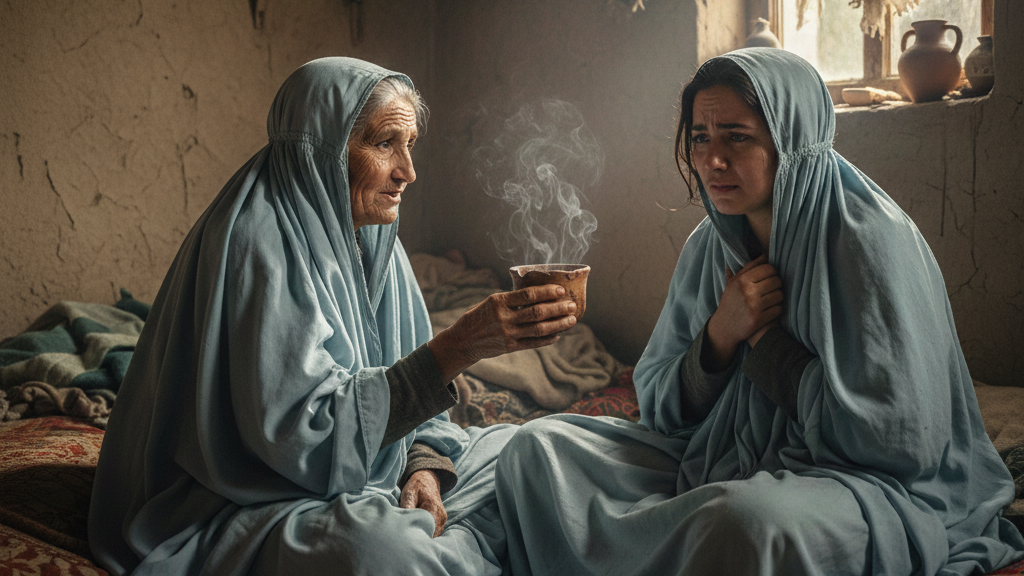
The hidden reality of abortion in Afghanistan, where women risk zarab (honour) and even their lives to terminate pregnancies, reveals a crisis of healthcare, human rights, and rigid cultural norms that few outside the country truly understand. In a conservative society shaped by Pashtunwali—the traditional Pashtun code that prizes family honor and social conformity—women often face punishment, stigma, and illegal, unsafe abortions because legal options are nearly nonexistent. Since the Taliban seized power in 2021, these pressures have only worsened, pushing abortion into the shadows and endangering countless lives.
In December 2025, an AFP investigation captured the harrowing experiences of Afghan women like Bahara, who begged at a Kabul hospital for an abortion at four months pregnant only to be told “we’re not allowed.” With her husband insisting she “find a solution,” she resorted to a cheap herbal tea that induced dangerous bleeding, followed by emergency treatment under the guise of a fall. Others described crushing their own stomachs with heavy stones or taking toxic pills in desperate bids to end pregnancies. These stories underscore the perilous reality for women who cannot legally access safe abortion services.
Afghanistan’s legal framework is extremely restrictive: abortion is permitted only when a woman’s life is gravely endangered, and even then, the bureaucratic hurdles and social taboos make it nearly impossible in practice. This echoes dīn (religion) interpretations that value the fetus as a life to be protected except in the most extreme cases—a view that aligns with the Taliban’s strict policies. Women and healthcare providers live in fear of qānūn (law) and sang sara (family reputation), leading many to seek secrecy over safety.
The consequences are catastrophic. Afghanistan has one of the highest maternal mortality ratios globally, exacerbated by complications from unsafe abortions, limited access to contraception, and severe gaps in maternal healthcare. Decades of conflict, followed by the Taliban’s rollback of women’s rights—banning girls from schools and women from jobs and movement—have devastated the health system. Zanān (women) cannot train as midwives or nurses in many provinces, and clinics shut down as international aid dwindles.
In rural areas where pashtūn tribal norms dominate, abortion carries heavy stigma, often perceived not just as a legal transgression but as a stain on khel (clan) honor. Families sometimes compel clandestine procedures to avoid disgrace, while others ostracize women who seek help. The lack of access to modern contraceptives—less than half of women have access—further fuels unwanted pregnancies and unsafe terminations.
Globally, norms around abortion are shifting, with more than 60 countries liberalizing access and recognizing reproductive rights as fundamental. Yet Afghanistan remains tethered to restrictive practices that punish women and deny autonomy over their bodies. In comparison, movements in Latin America and Europe have mobilized around my body, my choice, highlighting a stark contrast with life under Taliban rule.
International responses reflect growing concern. In late 2025, Australia imposed sanctions and travel bans on Taliban officials for escalating human rights violations, particularly against women and girls—a sign that global pressure is mounting, even as Afghan women are increasingly isolated.
For Afghan women, abortion is not just a medical issue but a reflection of broader gender oppression. The khatoon (lady) who cannot seek care may be treated as a criminal or forced into secrecy where the risks are lethal. Even when life-threatening conditions arise, the fear of legal repercussions and sharm (shame) can keep women from seeking timely help, often with tragic results.
Yet amid darkness, women’s voices persist. Exiled Afghan journalists and rights groups continue to document abuses and call for change, reminding the world that behind every statistic is a human life shaped by power, culture, and resilience. The struggle for reproductive justice in Afghanistan is inseparable from the broader fight for huqūq-e zanān (women’s rights)—a struggle that demands international solidarity and unwavering attention.
In the end, the plight of Afghan women seeking abortions is a stark testimony to what happens when reproductive rights, cultural constraints, and authoritarian rule collide, trapping millions in a system where choices are scarce and costs are measured in blood, fear, and lost futures.
Sisters, let me tell you something straight from the chili-pepper heart: when a woman in Afghanistan has to crush her own stomach with a stone just to end a pregnancy, that is not culture, not religion, not tradition. That is violence—systemic, sanctioned, and inflicted through silence. And yet, the world still tiptoes around words like “honor,” “modesty,” “tradition,” as if these poetic veneers justify the brutality hiding beneath. Enough. Bas! We must call things by their real names.
What we are seeing in today’s Afghanistan is not simply “restrictive abortion laws.” It is the total erasure of women’s autonomy over their bodies, their futures, their health, their very breath. When clinics turn women away out of fear, when men demand secret abortions but leave the risks to their wives, when mothers feel compelled to “fix the problem” using stones, herbs, or sheer desperation—this is not private family drama. This is state-engineered power funnelled through patriarchy, enforced with shame, and paid for with women’s blood.
And let’s talk about shame—sharm—the favourite tool of every patriarch from Kabul to Kandahar. Afghan women are taught from childhood that their bodies are battlegrounds for family honor, and any pregnancy outside the narrow, sanctioned script becomes a stain. But notice how only women ever carry that stain? A man can demand sex, deny contraception, force pregnancy—and walk away unscathed. But the woman who tries to survive it? She becomes the criminal, the sinner, the outcast. Tell me again how this is about “protecting life.”
What enrages me most is how the Taliban cloak all this in righteous language. They say they are defending morality, yet they preside over a system where women bleed to death at home because they cannot seek care without risk of punishment. They claim to follow divine law, but everything they do screams of earthly control—of lineage, of ownership, of fear of women making their own choices.
And sisters, we must not let the world look away. Unsafe abortion is not some Afghan anomaly; it is what happens wherever misogyny teams up with authoritarianism. It is what happens when society decides women are vessels, not people. Afghan women—brave, resilient, luminous—deserve far more than whispered sympathy. They deserve rage on their behalf. They deserve solidarity. They deserve the freedom to choose life on their own terms.
Because here is the truth Spicy Auntie will shout through every checkpoint and censor: a society that does not trust women with choices does not deserve to control their bodies.