


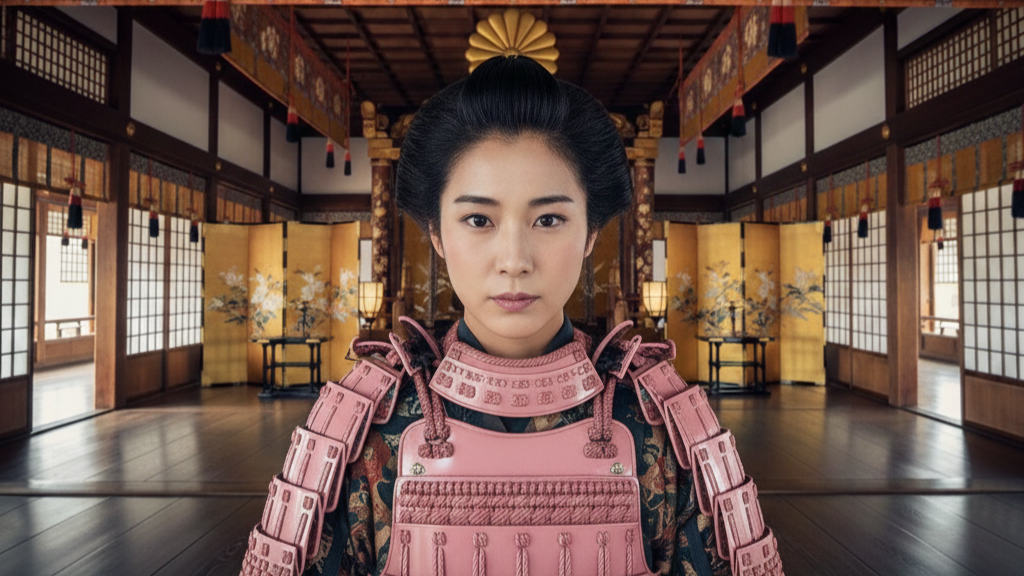
As Japan’s sole surviving heir of her generation, Princess Aiko has inadvertently become the spark igniting one of the most consequential debates in the country today — should Japan allow women to ascend the Chrysanthemum Throne? As of late 2025, growing public affection for Aiko, combined with the ominous shrinking of the imperial family, has re-fuelled calls to rewrite the gender-exclusive succession rules codified in the postwar Imperial Household Law (1947), reigniting a century-long conflict between modern egalitarian values and ancient tradition.
Aiko, the only child of Emperor Naruhito and Empress Masako, turned 24 this autumn — a milestone that underlines the urgency of the debate. During the recent visit to Nagasaki with her parents, crowds greeted her name with cheers louder than for the Emperor or Empress, prompting supporters to press harder for reform. Many of those backing a change say the current male-only succession system, which legally excludes Aiko from ever becoming sovereign, now looks unsustainable.
The problem is not merely symbolic. Under the law, female royals who marry commoners — as many princesses have — lose their imperial status, shrinking the already fragile dynasty. With only a handful of male heirs left — the teenage Prince Hisahito being the only one from the younger generation — many fear the monarchy could face extinction within a few decades absent major change.
Support for reform is surprisingly broad. Recent polls cited in Japanese media suggest public backing for a reigning empress is strong — sometimes quoted as high as 80–90 percent. Among voices pushing for change is an informal grassroots movement that uses comics, social media campaigns, leaflets, and even YouTube channels to make the case. One prominent example is a manga by cartoonist Yoshinori Kobayashi entitled Aiko Tennō-ron (“Princess Aiko as Empress”), which has circulated among members of the national legislature.
But opponents remain — and they are vocal. Conservative politicians, including high-ranking figures in the governing party, argue that opening the throne to women would break with a sacred, male-lined tradition that reaches back millennia. Some warn that allowing a woman to sit on the throne might erode the imperial lineage’s “unbroken male bloodline” — a core concept underpinning national identity and linked deeply to historical and religious beliefs around the sun goddess Amaterasu.
Many scholars, however, reject that resistance as rooted in a 19th-century legal reform rather than ancient custom. Prior to the 1868 Meiji Restoration, Japan’s imperial history actually includes several female sovereigns — though their successors were always drawn from the male line. The exclusive law of male agnatic succession was codified only with the modern Imperial Household Law in 1947. Indeed, proponents of reform argue that allowing a female sovereign like Aiko would restore a more historically accurate and inclusive tradition, reflecting centuries when women played a critical — albeit often ignored — role in imperial lineage and clan leadership.
Culturally, calls for reform speak to a broader generational shift in Japan. The term “Josei Tennō” (女性天皇 — “female emperor/empress regnant”) has re-emerged in public discourse, evoking both respect for Japan’s ancient roots and a desire for a modern monarchy that reflects contemporary values. Advocates argue that enabling Aiko to ascend would not only secure the future of the imperial institution, but also send a strong message about gender equality in a country where women still struggle for parity in many spheres.
Still, legislative inertia remains entrenched. While lawmakers convened in late 2023 and early 2024 to discuss potential reforms — including allowing princesses to keep their royal status after marriage or re-admitting members from abolished collateral branches — no concrete bill has yet emerged. As of now, the issue remains more symbolic than practical, albeit with mounting social pressure and wider public support.
Ultimately, the debate over imperial succession in Japan is more than a question of who inherits a throne. It touches on national identity, cultural heritage, and the struggle between preserving ancient rituals and embracing modern notions of equality. With Princess Aiko coming of age and the male line thinning, supporters say the time is ripe — and perhaps now or never — for Japan to reconcile tradition with transformation.
Spicy Auntie steps onto this stage with her usual mix of affection and side-eye, fanning herself like an off-duty kabuki diva. My darling Japanese friends, you know I love your islands of artistry and contradictions — but let me be clear before anyone offers me a chrysanthemum-shaped teacup: I’m a fervent republican. Not the American kind, the human-kind. I don’t support any leader, ruler, or symbol of power who hasn’t been chosen by the people. Democracy, my dears, is my one true religion.
But since Japan insists on nurturing this millennia-old imperial bonsai — carefully trimmed, heavily symbolic, and watered with nostalgia — can we at least agree on one thing? If you’re going to keep the world’s oldest monarchy alive, then let it breathe the air of the twenty-first century. Let it inhale equality the same way Mount Fuji inhales snow each winter: naturally, inevitably, beautifully.
This notion that only a man can sit on the Chrysanthemum Throne feels like a relic preserved in a lacquered box. Gorgeous box, yes — but so very outdated. The world has changed. Society has changed. Women have changed. And Japan, which prides itself on innovation, art, and quiet revolutions of the heart, should not be the last one clinging to notions that crumble under the slightest modern sunlight.
Princess Aiko — bright, calm, competent, and adored — stands there like a living contradiction to the old rules. A nation sees her, respects her, cheers for her. And still the law says: “No, thank you, only men beyond this point.” How quaint. How tragic. How embarrassingly unnecessary.
If the imperial family is truly a symbol of Japanese unity, then let it symbolize the Japan people actually live in — not the one frozen in textbooks. If you must have emperors at all, then why not a woman emperor? Why not several? Why not open the gates and allow this ancient tradition to evolve instead of quietly withering like unattended sakura blossoms?
But listen closely, my loves, because Auntie has one more truth to sprinkle like sesame over your mochi: all women are princesses. All women are empresses. Not because of bloodlines or ceremonies, but because dignity doesn’t need a throne, and equality doesn’t require a genealogy chart.
So debate your succession laws. Rewrite them or don’t. Crown whom you wish. But remember this: the true empire worth defending is an empire of fairness — and that is something no ancient rule has the right to deny.