


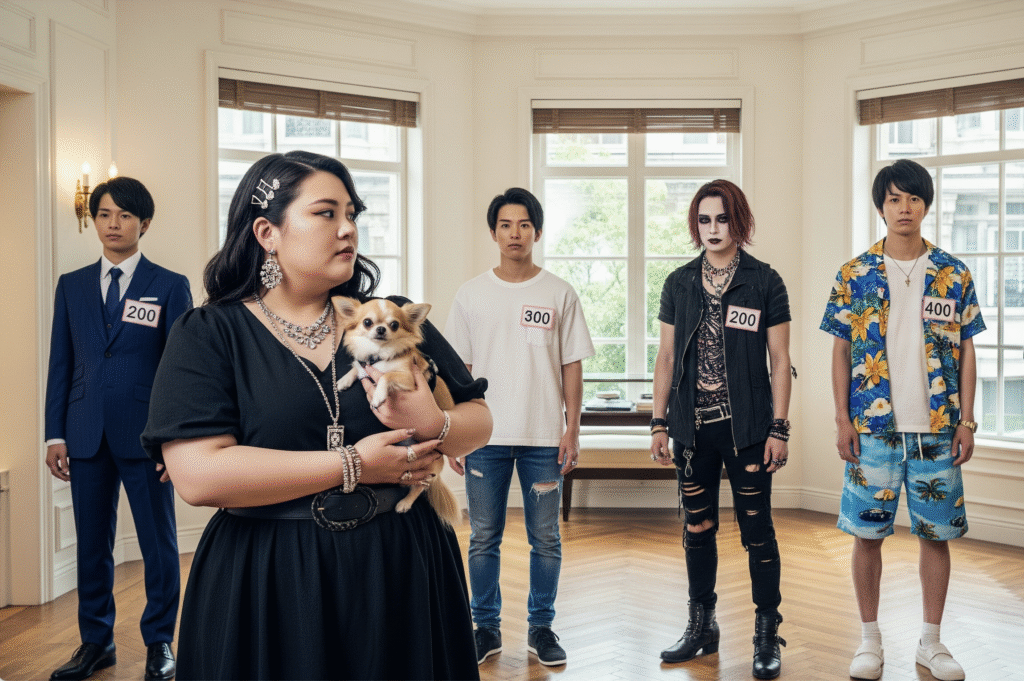
In the restless swirl of Tokyo and Osaka, where workdays stretch long and solitude creeps into the corners of modern life, Japan’s “boyfriend-for-hire” industry has emerged as a surprisingly ordinary solution to urban loneliness. The very phrase—レンタル彼氏 (rentaru kareshi)—captures the mix of curated intimacy and emotional hunger that defines so many relationships in big cities today. For a modest hourly fee, you can stroll with charm, laugh with someone trained in attentiveness, or simply feel less invisible while sharing a coffee in Shibuya.
At its core, the industry is straightforward: clients browse an online catalogue of handsome men, their hobbies and “boyfriend styles” carefully curated like soft-selling perfume. Dates take place in public—cafés, amusement parks, bookstores, the sort of warm daylight spaces where feelings can breathe but never spill over. Agencies enforce rules with near-ritualistic precision: no visits to private homes, no sexual services, and only limited physical contact. The promise being sold is not sex, but an experience—emotional presence, playful flirtation, undivided attention. Prices typically range between ¥3,000 and ¥6,000 per hour, though themed dates, day trips, or special requests can push totals upward.
The women who book these services are not a monolith. They include office workers exhausted by long hours, women recovering from heartbreak, introverts intimidated by dating apps, and divorced or widowed women seeking something warm but safely bounded. Some want practice for real dates; others simply crave a listening ear without judgement. Many appreciate the ritualized clarity: you get exactly what is advertised, nothing more, nothing less.
For the “boyfriends,” the job sits at the intersection of performance, hospitality, and emotional labour. Some are students or freelancers; others moonlight from the more notorious ホストクラブ (host clubs), where male hosts sell fantasy, flirtation, and eye-watering champagne bills. Host-club culture, especially in Kabukichō, is its own universe—glamorous on the surface, but with well-documented dangers for both workers and clients: debt spirals, emotional manipulation, and power imbalances disguised as romance. The rent-a-boyfriend agencies make a point of distancing themselves from all of that. Their model is sober, daytime, and rule-driven, a “clean” version of commodified affection.
But to understand why this ecosystem thrives, one must look beyond individual transactions. Japan’s broader “rental relationships” economy has been expanding for over a decade. There are レンタル家族 (rental families) hired to attend weddings, play the role of a spouse or father, or stand in during difficult emotional conversations. There is おっさんレンタル (ossan rental), where middle-aged men provide friendly companionship, conversation, or guidance. There are cuddle cafés (添い寝屋), offering platonic co-sleeping to soothe loneliness. Each service fills some gap that the traditional social structure—strained by work culture, demographic shifts, and the long slow unravelling of communal bonds—no longer adequately supports.
This is the heart of the debate. Critics argue that the rise of rental boyfriends is another symptom of Japan’s emotional reserve, the culture of carrying sadness quietly. Turning affection into merchandise, they warn, risks deepening isolation rather than healing it. Emotional dependency on an actor playing a role can distort expectations and blur the line between genuine connection and paid simulation. Feminists critique the transactional nature of emotional labour, even as some celebrate that—for once—women wield the financial and social power in these interactions.
Supporters counter that companionship, even when paid, is not inherently hollow. In a society still hesitant to normalize therapy or emotional vulnerability, a hired “boyfriend” can be a safer, lighter bridge toward rebuilding confidence. For many women, it’s simply an indulgence—like booking a spa day for the heart. The boundaries are clear, the stakes low, and the experience controlled.
Meanwhile, Japan’s export of this concept has already sprouted imitators across Asia. From Indonesia to Australia, rental partners and bespoke romance experiences are emerging, often citing Japan as the pioneer of a new form of curated intimacy.
In the end, the boyfriend-for-hire industry mirrors the cities it inhabits: dazzling, lonely, inventive, and quietly aching for warmth. In those brief hours of strolling along the Sumida River or sharing ramen under lantern light, clients aren’t buying love. They’re buying the possibility of feeling seen—if only for the length of a rented afternoon.
Japan, Japan… sometimes I want to shake you gently by the shoulders and whisper, “Go out. Socialize. Talk to each other for Pete’s sake!” You’ve built a nation where trains run on time, toilets talk, robots bow politely, and yet the simple act of saying hi to a stranger seems to require Olympic-level courage. So here we are, in the age of レンタル彼氏—boyfriends-for-hire—because even loneliness has learned to dress neatly and book appointments online.
But let’s be honest: who am I to judge? Asia is full of ways we pretend not to be lonely. Some people binge dramas. Others adopt three cats. Some people marry the wrong man… twice. And some, in the very particular emotional geometry of Japan, pay a charming young man to walk with them through Shibuya while discussing their favourite dessert. It’s not the end of civilization. It’s just another flavour of coping in a world that keeps getting faster and colder.
What strikes me is not the strangeness of the service, but the tenderness of the need behind it. An hour of human warmth. A conversation without judgement. A walk where someone listens—truly listens—without checking their phone or looking bored or mansplaining to you why your job, your feelings, or your heartbreak are “overreactions.” In a society that prizes emotional restraint so highly it sometimes forgets the value of emotional release, renting a boyfriend isn’t just indulgence. It’s relief.
And yes, yes, I hear the critics: “But Spicy Auntie, isn’t this commodifying intimacy?” Darling, everything is commodified these days—your attention, your data, your time, your beauty standards, even your peace of mind. At least this kind of transaction is transparent. At least the rules are clear. At least the boundaries are written in bold: no sex, no coercion, no pretending beyond what both sides agree to.
That part matters deeply to me. Respect. Consent. Boundaries. Three things missing in far too many real relationships, whether in Tokyo, Bangkok, Manila, or Phnom Penh. If a woman—tired, lonely, heartbroken, or simply curious—chooses a safe, bounded way to feel seen for an afternoon, then let her. And let the young men who provide that service work with dignity and without stigma.
Would I personally rent a boyfriend? Probably not. I prefer my flirting unmetered and my companionship messy and real. But I won’t shame anyone who does. If an hour of paid human interaction brings back a spark of connection in a society that desperately needs more of it, then go ahead, Japan—book the date. Just remember: warmth is still warmth, whether it’s scheduled or spontaneous.