


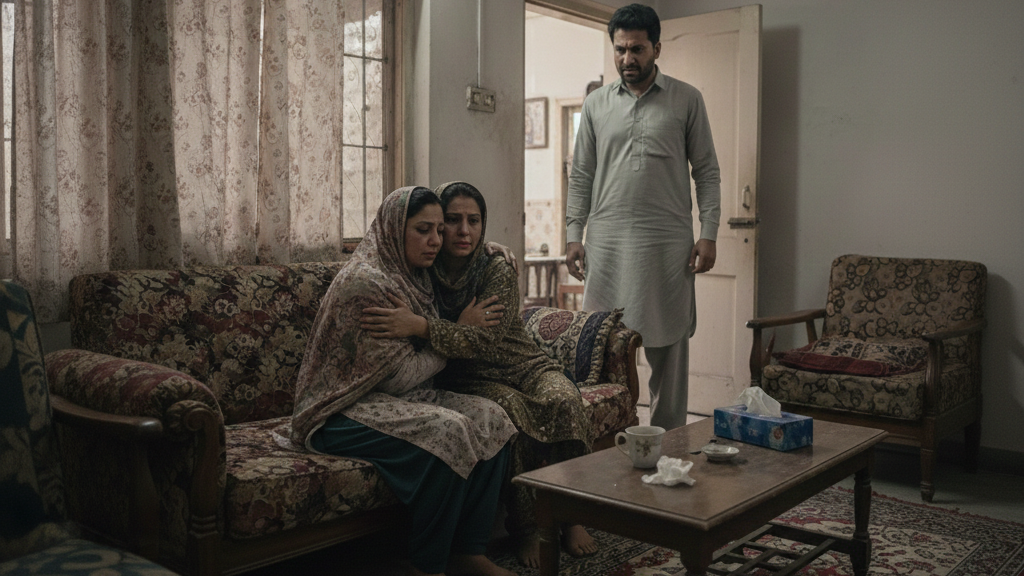
Every ten minutes, a woman in Asia loses her life at the hands of someone she once trusted—be it a partner, a family member or someone who should have been her safe space. The grim reality of femicide in Asia has burst into sharper focus: at least 17,400 women in Asia were killed by partners or family members in 2024.
This figure comes from a landmark joint briefing by United Nations Office on Drugs and Crime (UNODC) and UN Women, which reports that globally around 50,000 women and girls were killed by intimate partners or family members in 2024—equivalent to roughly 137 victims every single day.
The term “femicide” may sound academic, but the lives behind the numbers are tragic, intimate and avoidably brutal. In the Asian context, cultural dynamics like the pressure of traditional gender roles, family honour expectations, and domestic-space isolation form a lethal brew. Homes that should feel like sanctuaries become battlegrounds.
Asia’s relative rate—0.7 victims per 100,000 women for partner-/family-related femicides—is lower than regions like Africa or the Americas. Yet “lower” here is painfully misleading. The sheer population base means the total number of lives lost is enormous. In addition, under-reporting, weak data systems and variable legal definitions across countries hide the true scale of the crisis.
Here the killers are often men who believe they have power over women. In many Asian societies, expectations of female subservience, preserving family reputation, and private conflict-mediation render partner violence invisible until it becomes deadly. In places where leaving a marriage is seen as shameful or where financial dependency ties women to abusive spouses or families, the danger escalates. For example, long-standing practices such as “dowry-related deaths” in South Asia illustrate how lethal gender norms permeate family life.
Consider also how the domestic violence-to-femicide trajectory plays out: coercive control—monitoring, isolation, threats, stalking—often precedes the deadly act. The UN report stresses that femicide doesn’t happen in a vacuum: it sits at the end of a continuum of violence. CBS News+1
In Asia, the region’s mix of rapid modernization and still-embedded patriarchal legacies creates unique vulnerabilities. Urban migration, economic stress, weak protection systems and intimate partner violence intersect with limited shelters, hotlines or legal recourse for women. Many countries do not yet treat femicide as a distinct category, which challenges prevention and accountability efforts. The lack of consistent data collection—especially for partner-related killings—means many deaths are recorded simply as “homicide,” losing the gendered dimension of the crime.
Yet amid the bleak numbers there are pathways to change. Recognising the home as a site of danger rather than safety is a critical shift. Coordinated responses are being recommended: early risk-assessment systems for women in volatile relationships, integrated police-social-service-legal frameworks, stronger mandatory reporting, and cultural-change campaigns that target male dominance, entitlement and silence. For Asia, it means pushing beyond private-family taboos and treating partner- and family-related femicide as a public health and human rights emergency.
The 2024 figures demand a dual response: one immediate, to protect women already at risk; the other structural, to unravel the deep social and cultural patterns that say “this belongs to the private sphere” and therefore goes unchecked. Without both, the loss of life will continue—and so will the silence that makes prevention harder.
For the women of Asia—mothers, daughters, partners, sisters—this is more than data. It is a call to end violence when it is still reversible, to stand up when home isn’t safe, and to demand legal definitions, resources and systems that match the scale of the threat. Because the landmark number—17,400—isn’t just a statistic. It’s a warning too: the very space meant to protect can become the site of ultimate betrayal.
Spicy Auntie here—and my blood is boiling hotter than a wok left unattended. Seventeen thousand four hundred Asian women killed by partners or family members in a single year. Let that number sit with you for a moment. Let it echo. Let it bruise. Because behind every digit is a sister whose life was snuffed out by someone claiming to love her. This isn’t a statistic; it’s an indictment writ in grief and silence.
What appalls me most is how familiar the context is. The script repeats itself across our vast continent—Bangkok to Bengaluru, Manila to Mashhad. Women trapped in marriages they cannot leave because divorce is taboo. Daughters expected to obey fathers, brothers, husbands as if obedience were a birthright. Families insisting “this is a private matter,” even when bruises pile up like unpaid bills. Communities that romanticize suffering, telling women to be patient, forgiving, long-suffering—until patience kills them.
And men—oh, the men who think they own the universe and the woman standing beside them. Who are raised to believe a wife is an extension of their authority, not a human being with agency. Who use rage as vocabulary and fists as punctuation. Who claim “honor,” “stress,” “jealousy,” “tradition,” “religion,” “alcohol,” “love”—every excuse in the cosmic pantry to justify brutality. Spare me. Violence is a choice. Femicide is the final, unforgivable act of that choice.
What makes me furious is the complicity wrapped in silence. Laws exist in many countries, yes—but they are asleep at the wheel. Police shrug. Courts delay. Families hide. Media sanitizes. Politicians wring hands at conferences but refuse to fund shelters, hotlines or gender-sensitive policing. We lose thousands of women who begged for help long before they died, whose fear was treated as melodrama, whose danger was minimized until it became fatal.
Asia must stop treating femicide as an unfortunate family tragedy and start recognizing it as a public crisis. A gendered crime. A structural failure. A social emergency. Stop saying “she should have left.” Start asking why her world gave her nowhere safe to go.
I am tired, sisters, but I’m not defeated. Angry, yes—furiously so. But anger can be oxygen. Let it fuel reforms, ignite conversations, scorch the shame culture that keeps women silent. Let it burn down the ancient illusion that a woman’s life belongs to her family.
No more excuses. No more euphemisms. No more daughters dying inside their own homes.